Showing posts with label Honda. Show all posts

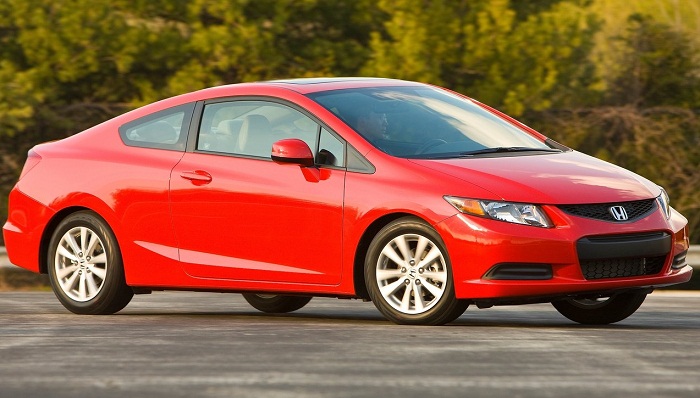
Honda Civic Coupe 2012

The all-new 2012 Honda Civic represents the ninth generation of one of the company's most popular and globally recognized products. Having earned a reputation for being a fun-to-drive compact that is simultaneously fuel efficient, sporty, stylish and durable, the Honda Civic has become a beloved and relied-upon member of the worldwide transportation family. Cumulatively, the Civic has reached 8.8 million customers in the United States through 2010 since its launch as a 1973 model.

Each generation of Honda Civic has improved with a specific development theme in mind. The 2012 Civic embraces the fundamental concept of a "futuristic and distinctive compact," a direction that introduces new values that reach ahead of present-day needs and elevates the experience that Honda Civic represents. Major strides include improvements to refinement throughout, increased fuel economy on all models, the further addition of interactive technologies for personalization and convenience, along with enhancements to performance, ride and interior packaging.

Civic customers span the entire public spectrum of automotive drivers. They are high school graduates and college students just beginning their adult lives; they are families with young children; they are schoolteachers, soccer parents and professionals, environmentalists and performance enthusiasts; and they are Generation Y, baby boomers and retirees. And they live in Snow Belt states, Sunbelt states, in the Midwest and in Hawaii and Alaska. But regardless of their demographic and psychographic makeup, Honda Civic customers are tied together by one thing - they are young at heart. Because at the end of the day, beyond its myriad attributes (including safety, economy, durability, comfort and style), the Civic is fun to drive.

The automotive landscape has rapidly evolved in the last decade with increased interest in fuel economy, low emissions and overall affordability. All of these traits are among the Civic's strongest advantages. The new 2012 Civic lineup further embraces these concepts with six different variants that span from ultra efficient to high performance, with specific models designed to better meet individual needs and preferences. For 2012, a highly affordable and highly efficient Honda Civic HF has been added to the lineup. The aero-enhanced Civic HF achieves an estimated highway fuel economy rating of 41 miles per gallon, two more mpg than the regular Civic Sedan, and the highest highway fuel economy rating in America for any gasoline-only compact sedan equipped with an automatic transmission.

The 2012 Honda Civic model lineup is comprised of:

    Civic Sedan (Civic DX, Civic LX, Civic EX and Civic EX-L)
    Civic Coupe (Civic DX, Civic LX, Civic EX and Civic EX-L)
    High-efficiency and value-oriented Civic HF (new)
    High-performance Civic Si Sedan and Civic Si Coupe
    Ultra-efficient Civic Hybrid (with new Lithium-Ion batteries)
    Ultra-clean Civic Natural Gas, previously known as Civic GX (available at qualified dealers nationwide) Read More!

Honda HSV - 010 GT

Honda Motor Co., Ltd. introduced the Honda HSV-010 GT, which will compete in the GT500 class of the 2010 Super GT Series.

Honda HSV-010 GT Technical Specifications

Dimensions
Length: 4675 mm
Width: 2000 mm
Vehicle weight: 1100+ kg
Engine
Engine name: HR10EG
Configuration: Liquid-cooled, naturally aspirated, longitudinal V8
V angle: 90°
Valve train: Gear-driven DOHC - 2 intake and 2 exhaust valves per cylinder
Displacement: 3397 cm3
Bore x stroke: 93.0 x 62.5 mm
Maximum output: 500 PS (370 KW)
Maximum torque: 392 Nm
Throttle control system: Mechanical
Fuel supply system: Programmed fuel injection system (Honda PGM-FI)
Fuel: Lead-free premium gasoline
Lubrication: Dry sump
Powertrain
Transmission mechanism: Constant mesh
Transmission shifting method: Steering paddle shifter
Steering system mechanism: Rack and pinion system with electric power steering (EPS)
Tires
front: 330/40R18
rear: 330/45R17
Brake type and mechanism: Hydraulic ventilated disc system
Suspension system: Double wishbone
Stabilizer: Torsion bar Read More!

Honda Insight EU

Although the Honda Insight design team started with a blank piece of paper - in that this was a brand new model with no history - they faced many challenges in creating the exterior appearance of the Honda Insight.

On the one hand, as a low emission hybrid car, it had to express environmental credentials - it had to look like a 'green' car - but on the other hand it had to appear dynamic and fun to drive; part of Honda's key design principles. Above all, in line with the positioning of Honda Insight, the design had to appeal to a broad range of people.

"We wanted the car to be widely accepted," says Creative Chief Designer, Motoaki Minowa. "If we just created an environmentally-friendly car it could have looked dull, or boring. We wanted to insert a sporty factor to make the car more appealing - and after all, sportiness is in Honda's DNA."


While the 'greenness' of the car may have challenged the sporty direction of the overall design, in some areas it actually helped the dynamic cause. Because the newly-developed IMA system is more compact, it meant the nose of the car could be shorter, creating a snubbed, more aggressive look to the front end.

Another important factor that led (and to some extent restricted) the exterior design was the bodystyle itself. To appeal to as many people as possible, a 5-door layout was chosen, and this brought its own challenges, particularly when optimising the aerodynamics of the car, and creating enough headroom for passengers in the rear.

"The reason we chose a 5-door hatchback was that we wanted the car to be popular in Europe," says Yasunari Seki, Large Project Leader. "American Honda - the biggest market - asked us to build a car with a boot, but we decided on a 5-door design because to compete with other green cars and sell more in Europe, it had to be a 5-door hatchback. Of course, aerodynamically it is also a more favourable shape."

One thing that didn't restrict the area of design was the budget, even though the rest of the project was so concerned with reducing costs. If anything, the development team spent more money getting the appearance of the car right. Adding an extra window to the rear quarter, for example, was costly, but was essential in creating a sleeker look. "The car had to be stylish and make its owner feel proud," says Mr Minowa.

Many will have noticed the similarity in the overall shape and look of the Insight to its fuel cell cousin, the Honda FCX Clarity. As well as the aerodynamic advantages of this shape, Mr Minowa says there's a definite reason for mimicking the body style of the advanced hydrogen-powered car.

"We intentionally tried to make the Honda Insight look like a baby version of the Clarity," he says. "There are some design treatments and colouring effects we have taken from the FCX, but basically the car's shape is very similar. FCX Clarity is the leader, the most advanced car, the ultimate clean car - and we want the Honda Insight to follow that lead. In a way, because the new Honda Insight takes design cues from the old car and from the FCX, it is bridging the gap between the past and the future."

Lights

The Insight adopts slim, projector-style headlights in a 4-light cluster. The headlight's low beam has blue detailing, and the indicators are located in the lower bumper face.

At the rear, the Honda Insight uses LEDs for the taillights and stop lamps. LEDs consume less power, which aids fuel economy. But rather than just replacing bulbs with LEDs, the designers attempted to 'spread the light' through the design of the taillight unit and the use of reflective surfaces.

While there were many considerations and factors that affected the exterior design, it was aerodynamics that most governed the shape and look of the Honda Insight.

Making the car as slippery as possible exaggerates the already frugal hybrid technology on board the Honda Insight, increasing fuel economy. So the design team set about creating a shape that had minimal drag. Elsewhere we've spoken about the similarity in the exterior design to that of the FCX Clarity, but that likeness is closest when the two cars are viewed in profile. It's clear that the rear sections of these two cars are almost identical in shape - and for good reason.

Firstly, the line from the centre of the roof to the top of the boot lid is at the optimum angle for controlling the flow of air off the top of the car, with minimum turbulence. Also, you'll notice that the top half of the body tapers in towards the rear of the car, which also helps the air flow travel smoothly over the car. Stable air flow over this section helps the car pass through the air with minimal drag.

"The concept for the main shape of the car is called 'Aero Athlete'," says Mr Minowa. "It reflects a sporty, lean body with no fat, the tension of muscles and nothing unnecessary added."

The shape of the tailgate is also very important - again, compare the Insight's boot to that of the FCX Clarity, or Honda CR-Z, or even the original Insight. They all share the same shape and lines to help the aerodynamics.

"We learnt a lot about aerodynamics from the first Insight," says Mr Minowa, Creative Chief Designer. "From the B-pillar back the two cars are very similar, but we couldn't have radical optimisations like the covered wheels, for example, as this Honda Insight had to have more appeal."

The lower body sections are much wider, which also helps the aerodynamic qualities, and provides a stable, wide stance - giving the car a more masculine appearance.

Paint

There are eight exterior paint colours: Spectrum White Silver Pearl, Cerulean Blue Metallic, Alabaster Silver Metallic, Polished Metal Metallic, Neutron Blue Metallic, Crystal Black Pearl, Urban Titanium Metallic and Milano Red.

Aero Athlete

This was the overall design theme for the exterior appearance of the Honda Insight. Aero stems from the desire to minimise drag and reduce frontal area, while retaining an attractive and sporty character. The shape has been tested repeatedly in a wind tunnel and was effectively shaped by the wind. The athlete part of the concept refers to a taut, honed body, without unnecessary weight or excessive bulk. Dynamic visual tension forms in the panels of Honda Insight like muscle of an athlete. The sensuous shape of "Aero Tail" is formed by Aerodynamics and as similar shape can be seen on the rear of the FCX Clarity and the original Insight models.

The shape of cabin is integrated into the bonnet and flows into the shape of front grille which enhances the bold hexagon shape of the lower part of the bumper. The front design incorporates the identity of FCX Clarity to recognize the fuel cell car's status as an environmental pioneer.

CHASSIS

The Honda Insight chassis is newly designed, but in the quest to produce an affordable car with compact dimensions, it is based on components used for the latest Honda Jazz - and as such, it shares some components (suspension brakes and steering) and characteristics with the supermini. From the starting point of Jazz, engineers devised a package that accommodates the hybrid system, provides space for adults to sit in comfort and allows room for the impressive load space.

The structure of the engine compartment and front section of the car is almost identical to Jazz, with some minor alterations to aid crash protection, but behind the front bulkhead the platform is unique to Honda Insight. The wheelbase is 2550mm (50mm longer than that of the Jazz).

Upon this platform, front and rear suspension from the Jazz are used, which means MacPherson struts at the front, and an H-shaped torsion beam at the rear to keep the load floor low, increasing luggage capacity inside.

Dynamically, the goal was to achieve pliant, but stable handling performance in a range of conditions and on a mixture of road surfaces.

Relocating the fuel tank

Although it shares many commonalities, perhaps the most significant difference between the Honda Jazz and the Insight platform is the position of the fuel tank. Many of you will be familiar with the Jazz's distinctive central tank layout, under the front seats, which helps make the car so versatile, but on the Honda Insight platform, the decision was taken to put the fuel tank under the rear seats.

This meant that the seating for occupants could be mounted lower in the car, resulting in a lower roof, smaller cross-section area, and thus a more aerodynamic body shape, which assists fuel economy at high speed.

Brakes

The braking system comprises of front and rear discs matched with ABS, Electronic Brake Force Distribution (EBD) and Brake Assist as standard equipment.

Honda engineers concentrated on delivering effective stopping power with a linear, natural feel to the pedal, both in normal daily use and when heavier braking is required.

Wheels and tyres

The Honda Insight is fitted with a seven-spoke alloy design, to enhance the sporty image of the car.

Vehicle Stability Assist (VSA)

All Honda Insight grades are equipped with Honda's Vehicle Stability Assist (VSA) system, designed to assist the driver in maintaining control during cornering, acceleration and sudden manoeuvres by applying braking to the right or left hand wheels as necessary and managing the engine torque systems.

At its simplest level, VSA has a traction control function whereby it detects wheel slip under acceleration and coordinates the use of braking and engine torque to regain traction. In situations where the driven wheels are on surfaces with different levels of traction, such as a partially wet road surface, the system applies braking action to the wheel that's slipping, allowing the tyre with better grip to move the vehicle. In addition, the system reduces engine output to minimise wheelspin.

An indicator light flashes on the instrument panel while the system is actively enhancing the stability of the vehicle. A cockpit switch to the side of the instrument panel is provided to disable the VSA.

Warranty

The Honda Insight is covered by a 3-year / 144,000 km standard warranty, 3-year surface corrosion warranty, 5-year exhaust system warranty and 12-year structural corrosion warranty - plus, a unique 8-year warranty for the entire IMA system, including high-power battery.

ENGINE, MOTOR AND TRANSMISSION

Honda's IMA hybrid system concept is now 10 years old - having made its debut in the original Insight back in 1999. IMA stands for Integrated Motor Assist, which consists of a low-friction 1.3 litre engine that serves as the primary power source, an ultra thin electric motor, a lightweight and compact battery with a continuously variable transmission.

This system has been used successfully in not only the Honda Insight, but also the Civic IMA, and its successor, the Civic Hybrid. Over the years the system has evolved and become smaller, more lightweight and less expensive to produce, and the latest version in the new Honda Insight is the most advanced IMA technology introduced by Honda to date. The fifth generation IMA system in the Insight is 24% more compact than the fourth generation system freeing up space for luggage.

The engine itself is new, but is based heavily on the 1.3-litre from the Civic Hybrid. This modified i-VTEC unit from the Civic Hybrid has been further enhanced with lessons learned from the Jazz incorporated to improve fuel economy. The low friction, pattern coated piston design has been combined with a new catalyst design to further optimise this already highly efficient power unit. These measures along with a further stabilised combustion process give a fuel economy improvement for the engine alone of 2% on what is already a highly-efficient unit.

During deceleration, when the engine's cylinders have no load on them and so combustion in all four cylinders is stopped and each pot is sealed shut. This virtually eliminates the pumping losses, decreasing resistance to allow the motor/generator to operate more efficiently and increase energy recovery to charge the battery.

The technology used to shut the cylinders, VCM (for Variable Cylinder Management), is also used to shut all four cylinders when only little torque is required - during low speed cruising for example. In this mode the Honda Insight is powered by the electric motor only, with the pistons running idle.

In addition, virtually everything possible has been done to the engine to reduce friction, including an offset crankshaft/connecting rod design, plateau honing of the cylinders for a smoother surface and a second low friction piston ring.

On its own, the engine produces 88PS and 121Nm of torque, but the key to hybrid systems is the support given by the electric motor that can help boost performance as well as keep emissions and fuel consumption to a minimum.

What is a hybrid?

Hybrid is the combination of a petrol engine with an electric motor. The battery that powers the electric motor charges itself up with regenerative energy from deceleration and braking. Therefore the Honda Insight never needs to be recharged from an external power supply. The integrated electric motor assists the engine by giving it a boost during acceleration to improve fuel economy. The hybrid system also runs the car's systems at idle and shuts off the combustion engine to reduce emissions, so when a driver stops in traffic the engine falls silent.

The result is a car that behaves like a petrol-engined car in terms of performance, emits less CO2 than an equivalent diesel and delivers excellent fuel economy.

Electric motor

As well as a new engine, the Honda Insight gets a new, improved motor which uses coils with high-density windings and high-performance magnets to produce 14PS and 78 Nm. But the real step-forward with the motor has been its size and shape - the latest version is much thinner than the motor in the current Civic Hybrid (35.7mm vs 61.5mm), which means the entire IMA system is more compact and lightweight.

Improvements have also been made to the high-power battery, which is located under the boot to help lower the centre of gravity. The IPU is smaller and lighter than that found in the Civic hybrid, with size reduced by 19% and weight by an impressive 28%.

The cooling system for the battery has been much improved, which means it's more efficient in its use of power, and can feed it to the electric motor more often. A motor on the side of the battery pack draws through air from pipes leading to intakes outside of the rear seat bolster in the car (on the Civic Hybrid, the air intake is on the parcel shelf, which can be obstructed).

The recovery speed of the battery has also improved, meaning that with power from regenerative braking, it can charge more quickly and therefore deliver power to the electric motor more regularly.

Performance

When combined, the motor and engine produce lively performance ideal for urban environments, with good throttle response and acceleration times to rival conventional 1.6-litre petrol cars with automatic gearboxes. The Honda Insight reaches 100 km/h from a standing start in 12.6 seconds, and goes on to a top speed of 186 km/h.

Transmission

Using a CVT transmission in a hybrid provides smooth and predictable gear transitions and helps keep the IMA system operating in its most efficient range. In the Insight, an evolution of the high-torque CVT unit from the Honda Civic Hybrid is used.

This version of CVT has a lower final drive gear ratio (4.200 from 3.937), which results in faster-acting initial acceleration performance.

The start clutch control has been redesigned to take full advantage of the characteristics of the IMA motor that delivers more torque at lower revs. By engaging at lower revs to enhance initial acceleration and contribute to fuel efficiency.

Also, for the first time on a Honda hybrid, the Insight benefits from paddle shifts, so quick gear changes can be made from levers just behind the steering wheel.

Emissions/economy

Of course, one of the major benefits of hybrid powertrains is that they can reduce exhaust emissions and boost fuel economy. And when the systems are placed within a purpose-built, aerodynamic body, the advantages are enhanced. The Honda Insight performs well in government emissions and economy testing, achieving 101g/km and 4.4 l/100km (combined) - but that's not the whole story.

Life Cycle Assessments

As a matter of course, Honda carries out a Life Cycle Assessment (LCA) Programme for all of its vehicles which looks at the CO2 emissions at each stage of a car's life cycle, including production.

Honda developed this programme in 2007 to introduce a product specific LCA system to investigate the volume of CO2 emissions associated with the whole life cycle of each Honda vehicle. This allows Honda to compare the environmental impact of the manufacturing stage and indeed the whole life cycle of their hybrid cars.

The findings demonstrated two things, the importance of the 'use stage' in a car's life cycle CO2 emissions, and that there is very little difference between the CO2 emissions associated with the raw material and production stages of hybrids compared to conventional cars.

The Honda Insight will be produced at the Suzuka plant, the same as the Civic Hybrid as well as many non-hybrid products.

INTERIOR

The Honda Insight has been designed to comfortably accommodate five passengers, cleverly packaged within an aerodynamic shell.

Within this sleek exterior, the Honda Insight can still boast headroom and tandem distances among the best in class and rival many medium sized cars.

An inviting and airy interior has been created with clever designs that give an increased sense of space, and practicality.

Convex shapes have been used wherever possible to reduce mass of the interior plastics and create a sense of space, particularly where passengers sit. This moves away from the traditional interior design rules that mainly dictate concave surfaces.

For instance, the front dash is split into two distinct sections. The lower light-coloured section is convex and curves away from the driver and front seat passenger giving a greater sense of space and leg room while the upper, darker section surrounds the front occupants, the driver in particular, to give the feeling of a cockpit-style cabin.

Special attention was paid to outward visibility. Forward visibility is excellent thanks to slim A-pillars, large front door window surfaces that do not require a separate pillared front quarter window, and the same cabin-forward design used for the latest Jazz. Equally, the integrated window in the boot enables good low, rearward visibility, allowing the driver to see a low post, or child behind the vehicle. In addition, retractable rear headrests and rear three quarter lights increase rearward visibility.

Generous specification

High quality, tactile materials, stylish designs and tasteful colours have been used throughout the cabin. Plastics have a soft-touch leather-like appearance and fabrics are plush and comfortable.

Two interior upholstery colour combinations are available - dark royal blue with cream or warm, creamy beige. Seats are covered in two textured fabrics - a dotted pattern for the seating and soft suede-like material for the side bolsters. All models are equipped with active headrests for greater safety.

The steering wheel is fully adjustable for reach and rake to ensure drivers of all heights can be accommodated. A slim armrest and dead foot rest are also provided for extra comfort.

Also fitted as standard across the range are one-touch indicators for easy lane changing on motorways, an adjustable driver's seat, foot rest, passenger seat back pocket and vanity mirrors for both driver and front passenger.

Instrument panel

The two-tiered instrument panel allows the driver to focus on the important information - the speedometer above the steering wheel and the main instrument panel directly below it.

The fascia comprises of four main indicators - a large rev counter, flanked by the petrol gauge and motor assist gauge. The automatic gear selected is displayed within the rev counter. As on the Civic Hybrid the motor assist gauge shows, during driving, whether the electric battery is being charged e.g. during regenerative braking or whether the electric motor is assisting the petrol engine e.g. during hard acceleration.

A useful LCD multi-information display set within the centre of the rev counter provides information such as instant and average fuel economy, range, outside temperature as well as other displays to encourage more economical driving techniques. The information button on the steering wheel allows the driver to flick through the different information displays.

All instruments are located on or around the steering wheel, within easy reach for the driver.

ECON system

The green ECON button can be found on the dash, to the right of the steering wheel. When switched on the ECON system indicator appears in the top left of the instrument panel. The LCD display also indicates whether the system is active and serves as a coaching system by providing additional information to help the driver maximise economy.

Air conditioning

In automotive air conditioning units there is a cooling circuit involved that delivers a refrigerant to a condenser and evaporator thus delivering cool air to the cabin. This process involves a compressor and with it associated thermal, mechanical and pumping losses, which affect fuel consumption.

To improve the thermal efficiency of the air conditioning system on the new Insight, Honda engineers have expanded the usable thermodynamic range compared to conventional systems. Ingeniously, the piping layout is changed with the low pressure cold pipe enclosing the high pressure hot refrigerant pipe which has a scroll type groove on the, which means the cold refrigerant on its way back to the engine bay helps cool the warm refrigerant travelling to the cabin. The indentation on the outside of the inner pipe is in a spiral arrangement, which increases the surface area and therefore the efficiency of the heat transfer between the outer and inner tubes. This principle improves the thermal efficiency of the air-conditioning system and as a result, less effort is required from the compressor, resulting in improvements to fuel consumption.

Air conditioning in 'Idle Stop' mode

When driving the Civic Hybrid, during 'Idle Stop' mode the air conditioning could still be operated, thanks to an extra electric motor powered by the high-power battery pack. However, to save costs, this function has not been included on the Honda Insight. Instead, to keep the occupants comfortable, the length of the idle stop time is limited. However, when ECON button is pressed, a longer idle stop time is set for improved efficiency.

Audio systems

All models are equipped with a single CD/audio system, four speakers, steering wheel mounted audio controls and auxiliary jack with MP3/WMA/AAC playback capability. In addition, some models are fitted with a USB port, located in the centre arm rest/storage box which enables fifth generation or later iPods (including Nanos), plus a variety of other digital audio players, to be played through the Insight's main audio system. MP3 players docked via the USB port can also be controlled using the steering wheel mounted audio controls and depending on type, will charge once connected.

Satellite Navigation

The voice-activated satellite navigation system is a touch-screen unit utilising a fully updateable DVD for all data. The Honda navigation features 11 text languages, including: English, German, Italian, French, Spanish, Portuguese, Dutch, Danish, Swedish, Norwegian and Suomi. Five of these, English, German, Italian, French and Spanish can be used for voice activation and spoken guidance instructions. The Honda Insight's system allows the user to find a wide range of places of interest, including restaurants, petrol stations, airports and Honda service centres. The majority of points of interest include phone numbers where appropriate for added convenience. Where it is available, the Honda navigation system works with traffic information to alert customers to potential delays and navigate a route round them.

Hands-Free Telephone (HFT)

ES grades will also be equipped with Hands Free Telephone (HFT) kit, which uses Bluetooth technology to allow mobile phone calls to be made safely on the move.

A series of speakers and microphones installed in the car can connect to any Bluetooth-enabled communications device, even in a bag or briefcase.

The HFT system allows the driver to automatically transfer a call onto the HFT once the ignition has been turned to the ACC position. The user can also utilise the phone's keypad to make calls as well as storing up to 50 names with a speed-dial number. More importantly all numbers can be accessed by HFT. Read More!

Honda CR - Z Mugen

Mugen Euro has developed a highly-tuned version of the Honda CR-Z that aims to deliver up to 200PS and 215Nm of torque by boosting the hybrid's petrol-electric powertrain

The goal of the project was to prove hybrid cars can be exciting to drive, by producing "Civic Type R-like" performance from the hybrid coupe while remaining sympathetic to the original Honda direction for the CR-Z.

"We wanted a car that has genuine performance available at the touch of a button, but can perform just like a standard CR-Z and offer good fuel economy when the driver wishes," says Colin Whittamore from Mugen Euro. "For that reason we've kept the three driving modes, so the driver can select 'eco' or 'normal' to switch to economy and low emissions for the daily drive, but press the Mugen button for the full-blown 'weekend warrior' settings!"

The car retains both the Honda IMA electric motor and the original 1.5-litre i-VTEC petrol engine, which has been rebuilt to Mugen specification with bespoke upgraded and strengthened internal components.

"When we first approached this programme, we considered what to do with the Honda IMA system, and the answer was immediate and obvious - utilise it and build on it," explains Whittamore.

The addition of centrifugal forced-induction under the bonnet helps the Honda CR-Z Mugen deliver over 50 percent more power and torque from the Honda's petrol-electric drive train.

In order to give a fully integrated and smooth power delivery, Mugen Euro has developed the Mugen iCF system, the Mugen acronym for Integrated Centrifugal Forced-induction, which allows all the elements of the electro-mechanical system, including the forced-induction system, IMA motor and petrol engine, to work in harmony.

"The idea was to use the significant advantage of the early torque provided by the Honda IMA electric motor, then increase the torque available from the engine progressively," says Whittamore.

The iCF, along with an electronics upgrade, allowed Mugen to very neatly map the IMA to the extra power and torque of the engine, giving a smooth, integrated and powerful driving experience.

"I have to say that when any of us have jumped into the Honda CR-Z Mugen it has delighted us all," says Whittamore. "It's exactly what we were looking for. And the real beauty is that it can still be driven in the way customers of the standard CR-Z would recognise."

The Honda CR-Z Mugen needed to be visually different enough to attract attention, yet subtle enough to be aesthetically pleasing. Mugen also wanted to demonstrate the high quality of its parts, offering a solution that enhances and integrates with the original CR-Z styling, in line with the Mugen philosophy of custom parts with original manufacturer standards of quality and fitment.

Additions to the exterior of the car include Mugen front and rear under spoilers, side skirts, rear wing and 17-inch lightweight forged alloy Mugen GP wheels. Carbon fibre bonnet and doors not only reduce the overall weight of the car but enhance the sporty look, while the eye-catching Brilliant Orange Metallic paint provides the finishing touch.

The interior of the car continues the sporty theme, with lightweight Recaro sport seats and Mugen accessories, including a weighted gear knob and carbon rear view mirror cover. The assist meters display and record water and oil temperatures and oil pressure. These dials are able to display these in finer detail than the OEM read-outs and allow the driver to more easily see sudden changes or fluctuations under hard driving conditions. They can also be used to warn the driver if any of the values fall outside the customisable pre-set parameters.

How is the increase in power achieved?

Mugen took advantage of the torque given by the electric motor at low rpm and built on that, boosting induction using a supercharger to provide torque after the electric motor peaked, resulting in a flatter and longer torque curve. This means that more torque is available throughout the rev range.

Although the electric motor contributes less than 20 PS to the overall power, it does this almost instantly by generating its maximum torque between 1,000 and 1,500 rpm. However, where in the standard car this causes the peak torque to occur at less than 25 percent of the engine range, with the Mugen iCF the performance does not drop off at this point - as the power/torque graph for the 'stage 1' engine shows.

Early tests with a prototype car based on a standard CR-Z and a mid-tune engine have given 0-62mph times around that of the Civic Type R's official time of 6.6 seconds. With up to a further 15 percent increase in power to come over this 'stage 1' engine and with approximately 50kg reduced from the chassis, overall performance is on course to meet Mugen's original Type R targets.

How does the Honda CR-Z Mugen differ from the standard Honda CR-Z?

Mugen stripped and rebuilt the engine to enhance durability and reliability under increased loads and added supercharged forced induction to provide more horsepower and a flatter ascending torque curve.

As well as improvements under the bonnet, Mugen has used its extensive motorsport and Honda tuning experience to further develop the chassis dynamics, with 5-step adjustable dampers fitted front and rear, and an increase in track width. A sports exhaust has been added to aid engine breathing, and chassis weight has been reduced to assist handling and acceleration/ deceleration. The suspension also improves the control of body roll, while 17-inch lightweight forged alloy Mugen GP wheels allow the use of larger tyres without any unnecessary increase in unsprung weight, to promote better traction and response and to maximise the benefit offered by the limited slip differential that has been added. Bigger brake discs and 4-pot monobloc callipers help stop this powerful car.

Complementing the increased power is the addition of a Mugen body kit including bumper under-skirts, front grille, side skirts and rear wing along with a carbon fibre bonnet and doors to give the car a fierce appearance which matches its powerful credentials.

How much lighter is the car than the standard CR-Z?

The Honda CR-Z Mugen is 50kg lighter than the standard model which, when coupled with the power uplift, gives the car an impressive power to weight ratio approaching 5.4:1.

This has been achieved by using full dry carbon fibre bonnet and doors, which reduce weight considerably, as does the replacement of the front seats with lightweight racing versions, and the removal of the rear passenger seats.

Some components actually add to the weight of the car but earn their place in the specification with their enhanced capabilities. The front brake callipers are a good example. As 4-piston callipers they offer superb stopping power with minimum brake fade even after extended heavy use, and being made completely in one piece, the installation is extremely rigid, ensuring consistent contact between the disc and the pad.

What are the changes to the suspension?

Mugen has developed the suspension in two different directions:

The car will spend most of its time on the "fast road" suspension which is designed to provide better handling on the road without being excessively hard for passengers. The springs are stiffer than standard, but are controlled by 5-position adjustable dampers, which are based on Mugen's commercially available products and control the movement of the chassis in both compression and rebound. Mugen has also widened the track width at the front of the car to improve stability during weight transference in cornering and to help lower the centre of gravity.
Although not initially presented as a focused track-day car, Mugen has referred to the racedeveloped suspension components originally used at Motegi circuit in Japan to develop in parallel a track-biased suspension that while much stiffer than the road set-up further limit the body roll and vertical movement; ideal for consistent flat surfaces of most race circuits. Read More!

Honda FCX Clarity

The elegant form of the Honda FCX Clarity sets it apart from everything else on the road and complements the rational, environmental reasons for driving a fuel cell eletric vehicle. The sharp, dark chrome trim that runs from bumper to headlight draws the eyes toward the front wings, creating a powerful, dynamic look and a cool, clean, futuristic feel. The side mirrors add to the Honda FCX Clarity's free-flowing cabin. Mounted on slender arms that blend with the door moulding, they emphasise the elegant lines of the side windows, with the moulding embracing the mirror housing. The exterior door handles have a spare, clean look that accentuates the slender lines of the body. Robust rear wings reinforce the compact cabin for a bold, sculpted look. The rear glass and contoured design of the rear combination lamps emphasise the vehicle's wide, confident stance.

An extra rear window for more visibility control: looks great, enhances visibility, allows for a larger boot

The most distinctive feature of the new one-motion design is found at the rear of the Honda FCX Clarity. To take advantage of the high-deck design and enhance rear visibility, the car is fitted with an extra window with visibility control-a feature carefully designed to protect privacy. The rear of the car is set high to ensure good luggage volume, and windows are positioned in the upper boot lid and in the barrier behind the rear seat to allow the driver to see into the boot.

Visibility control lets occupants see out without passersby seeing in

A special polycarbonate layer is applied to both sides of the window to make transparency dependent on the angle of vision, protecting occupants' privacy. The result is excellent rearward visibility for the driver, with a high level of privacy for the rear-seat passengers.

Free-flowing, aerodynamic design capitalises on the new platform's unique qualities

It is no coincidence that the exterior design's key features-the front and rear wings, the front pillars, the tapered rear cabin-also contribute to outstanding aerodynamic performance. Superb aerodynamics are built into the free-flowing, one-motion form. And because there is no engine-and therefore no low-hanging exhaust system-the car's underbody is flatter, reducing drag.

Lightweight aerodynamic wheels

Ultra-lightweight forged-aluminium 5-spoke wheels have fin-shaped plastic fairings to suppress air turbulence, reducing weight and improving aerodynamics while adding a sporty touch.

A unique new finish highlights the body's complex surfaces and contours


The star garnet colour of the brilliant finish sets the Honda FCX Clarity's one-motion body apart. The extraordinary depth and quality of the coating provides a deep, expressive lustre that changes character depending on the play of light and shadow across its surface. This is a premium vehicle inside and out.

A comfortable, spacious, futuristic environment

Honda designers aimed to take maximum advantage of the space, creating a comfort zone with a futuristic feel. The central tunnel formed by the FC Stack neatly divides the left and right front spaces. The door linings help create an inclusive feel that sets apart the personal space of four independent seats within the spacious cabin. The floating instrument panel gives the cockpit a next-generation feel and provides the driver with new levels of functionality and visibility. The warm earth-tone colours are intended to create a soothing, natural feel.

Personal spaces that submerge occupants in comfort

Four distinct spaces have been created within the luxurious interior. The doors feature bold concave lines that accentuate the sense of roominess and create relaxing, personal spaces.

A floating, layered instrument panel for an advanced feel

Front pillars have been extended forward, while maintaining generous headroom proportions, to create a sense of space. The instrument panel is set off as a unified mass unconnected to the door line, making it appear to levitate. Bright colouring in the padding accentuates the airy, spacious feel.

An advanced cockpit for a futuristic experience

Naturally, because it's a Honda, the FCX Clarity is fun and easy to drive. The new fuel cell multi-functional display in the cockpit, for example, features three-dimensional displays of hydrogen consumption, battery levels, motor output and other key information. The speedometer is positioned directly above the display to minimise eye movement. A compact electronic shifter that leverages the latest in drive-by-wire technology has been moulded into the dial visors. Other design touches enhance the futuristic feel, like the start switch beside the centre console that activates the fuel cell stack.

Fuel cell performance meters

The luminescent three-dimensional meters recessed into the instrument panel display all key driving information. A centrally located ball-shaped H2 meter keeps track of hydrogen consumption. The vehicle's dials work together to provide an effective interface, providing the data output the driver needs.

The H2 ball-shaped hydrogen consumption gauge changes colour and size to reflect hydrogen consumption as driving conditions change. During high consumption, the ball becomes large and amber-coloured. As consumption decreases, it shrinks and turns yellow, then blue. The hydrogen fuel and battery gauges are to the right of the H2 ball-shaped meter. The fuel cell stack output gauge and battery output/charge display are on the outer perimeter.

Luxury from the future

Silver accents and blue acrylic in the inner door handle and audio panel impart a futuristic look. High-quality materials like wood-grain appearance panelling in the doors and luminous black lacquer headrests combine with warm colours for a luxurious, space-age feel.

Honda Bio-Fabric, a new interior fabric made from plant material

To help move away from petroleum-based resins and other synthetic fibres toward plant-based fabrics, Honda created a new premium biofabric for vehicle interiors. Honda Bio-Fabric is a polyester material called poly (trimethylene terephthalate) (PTT), made by fermenting corn. Its texture and durability make it perfect for use in seat coverings, door linings, console trays and arm rests-any part of the vehicle where the occupants will appreciate its premium feel. Poly(lactic acid) (PLA) fibres made from corn and other plant biomass are used in roof linings, floor carpeting and boot linings. In fact, all interior fabric coverings in the Honda FCX Clarity are made of natural, plant-based materials.

Honda Bio-Fabric: outstanding elasticity and feel

The molecular structure of PTT fibre is finely kinked in an accordion-like structure, allowing it to stretch more readily than other fibres and return easily to its original shape, avoiding sagging. It also has a unique, silky feel not found in other coverings. That is why Honda Bio-Fabric is used on all surfaces that come into direct contact with the occupants.

The production process

The 1,3-propanediol, which forms the raw material for PTT fibres, is normally produced by chemosynthesis. In contrast, Honda Bio-Fabric is made from corn, using a bio-tech fermentation method. It is combined with terephthalic acid, a petroleum extract, to create PTT resin, which in turn is spun, made into fibres, dyed and turned into Honda Bio-Fabric.

Reducing CO2 emissions

Based on the product life-cycle from procurement of raw materials to production, Honda Bio-Fabric provides a CO2 reduction of 30% per Honda FCX Clarity automobile, compared to conventional polyester made from petroleum products.

Plant-based resins are carbon neutral even when incinerated-the CO2 released during disposal is balanced by the CO2 absorbed during growth.

Front-row independent temperature controls

To meet the expectations of premium automobile customers, the Honda FCX Clarity is equipped with dual zone climate control to ensure optimal occupant comfort and more efficient use of energy.

Climate-controlled seats

Temperature control devices built right into the seat cushions and seatbacks use fans to draw in air, which a thermo-electric device then cools (by absorbing heat) or warms. The air is then blown through the seats to maintain the desired temperature while maintaining the breathability of the urethane, permeable foam and upholstery layers. Since this process provides heating and cooling in direct contact with the occupants, it is faster and more efficient than air conditioning alone. Individual controls are conveniently located on either side of the centre panel, providing an advanced touch of comfort for the luxury customer.

Ample storage space

The Honda FCX Clarity is designed to meet every storage need. There are drink holders for each occupant and many other easy-to-use storage areas. A boot space, separate under-boot storage well and other innovations add up to storage volume comparable to other mid-size sedans.

Smaller. Higher output. The fuel cell electric vehicle has evolved

Honda fuel cell electric vehicles continue to lead the industry. Recognising that the fuel cell stack is the key to the fuel cell electric vehicle's evolution, Honda has continued to improve performance and packaging. In 2003 Honda unveiled the Honda FC Stack, capable of sub-zero start-up and boasting outstanding production feasibility. Its design, featuring stamped metal separators and an aromatic electrolytic membrane, revolutionised the fuel cell. Next, Honda took up the challenge of structural innovation-creating the V Flow FC Stack with an original cell structure that delivers decreased weight, improved performance and even more compact design. The V Flow FC platform is the next generation in package design. It makes compelling styling and packaging feasible in a fuel cell electric vehicle for the first time. It is the breakthrough in stack technology that gives the Honda FCX Clarity its elegant design.

The new V Flow FC Stack: high output in a lightweight, compact design

The V Flow FC Stack features an entirely new cell structure that achieves a higher output of 100 kW, smaller size and lower weight, with a 50% improvement in output density by volume, and a 67% increase in output density by mass, compared to the 2006 Honda FCX Concept.

Layers of cells producing lots of energy

The Honda V Flow FC Stack uses a proton exchange membrane fuel cell (PEMFC) electrical generation system that directly converts chemical energy produced in hydrogen-oxygen reactions into electrical energy.

The extremely thin proton exchange membrane (electrolytic membrane) is sandwiched between pairs of electrode layers and diffusion layers (the hydrogen and oxygen electrodes) to form a membrane electrode assembly (MEA). The MEA is enclosed between two separators to form a cell-a single electrical generation unit. Several hundred cells are stacked together to form a fuel cell stack. As with batteries, these individual cells are connected in a series to produce a high voltage.

How electricity is generated

Hydrogen gas is passed over the hydrogen electrode. Each hydrogen atom is converted into a hydrogen ion in a catalytic reaction with the platinum in the electrode, releasing an electron.
Having given up its electron, the hydrogen ion passes through the electrolytic membrane, where it joins with oxygen from the oxygen electrode and an electron arriving via an external circuit.
The released electrons create a flow of direct current in the external circuit. The reaction at the oxygen electrode produces water as a by-product.
Because the electrolytic membrane must be kept continually damp, it is necessary to humidify the supply of hydrogen and oxygen. The water by-product is recycled for this purpose. Unneeded water and air are released as exhaust.

Electrical power on demand

The main components of the fuel cell electric vehicle's powerplant are the fuel cell stack, which generates electricity from hydrogen, the hydrogen tank, the lithium ion battery, the electric drive motor and the Power Drive Unit (PDU), which governs the flow of electricity. Because the vehicle is propelled by an electric motor, it delivers smooth, powerful acceleration and quiet operation, without the noise and vibration associated with an internal combustion engine. During start-up and acceleration-when a large amount of power is required-the electricity from the fuel cell stack to the drive motor is supplemented with electricity from the lithium ion battery to provide powerful performance. During deceleration, the drive motor works as a generator, converting kinetic energy into electricity, which is stored in the lithium ion battery along with any excess electricity produced by the fuel cells. When the vehicle is stationary, an idle stop system shuts down electrical generation in the fuel cell stack. Electricity from the lithium ion battery ensures continued operation of the air conditioner and other devices. The system optimally controls electrical power, resulting in highly efficient operation.

Another key advance: a vertical gas flow cell structure is combined with wave flow-channel separators for an even more compact, lightweight design

Until now, hydrogen and air flowed horizontally through the cells of Honda fuel cell stacks. The new V Flow FC Stack introduces a cell structure in which hydrogen and air flow vertically, and gravity is used to facilitate more efficient drainage of the water by-product from the electricity generating layer. The result is greater stability in power generation. The new structure also allows for a thinner flow channel and reduction in the stack's size and weight. And Honda's innovative and original wave flow-channel separators provide a more even and efficient supply of hydrogen, air and coolant to the electricity generating layer. The results are higher generating performance, optimal cooling characteristics and major reductions in size and weight. More compact, the new stack has far fewer parts and can fit into a single box. It is also much easier to manufacture.

V Flow cell structure for greater stability in electrical generation and a thinner design

In addition to allowing hydrogen and air to flow vertically, the V Flow design also means that water drainage is assisted by gravity. Water does not collect on the electrical generation layer, ensuring constant power generation. This also allows flow channel depth to be reduced by 17%-a major contributing factor in creating thinner cells and a more compact stack.

Wave flow-channel separators enable a smaller stack design

The fuel cell consists of a membrane electrode assembly (MEA)-an electrolytic membrane sandwiched between the pairs of electrode layers and diffusion layers forming the hydrogen and oxygen electrodes-which are in turn enclosed between separators containing flow channels for hydrogen, air and coolant. The V Flow FC Stack incorporates wave-shaped vertical flow channels for the hydrogen and air, with horizontal coolant flow channels weaving between them. The wave flow channels provide greater flow length per channel than straight channels, while the resulting turbulent flow within the channel promotes improved hydrogen and air distribution. As a result, the hydrogen and air are spread over the entire electrode layer, making more efficient use of the compact electricity generation layer and achieving approximately 10% higher generating performance than with straight flow channels. The horizontal coolant flow also ensures more even cooling over the entire electricity generation layer, allowing for a reduction in the number of cooling layers to half that of previous stacks. The previous stack had one cooling layer for each cell. The new stack needs only one cooling layer per two cells. This results in a 20% reduction in stack length and a 30% weight reduction-a major breakthrough in compact, lightweight stack design.

Improved heat mass allows start-up at -30°C

Improved water drainage due to the V Flow cell structure facilitates better output immediately after start-up. The reduced coolant volume and single-box design made possible by the wave flow-channel separators results in heat mass 40% lower than previous stacks. As a result, the amount of time required to achieve 50% output after start-up at -20°C is only one-quarter that of the previous stack. Start-up is now possible at temperatures as low as -30°C.

Distributing the powerplant redefines the basic configuration of the automobile

The most distinctive feature of the fuel cell electric vehicle-other than the fuel cell itself-is the layout flexibility made possible by the fact that the powerplant and drive train can be distributed throughout the vehicle. In order to take full advantage of this feature, each component in the powerplant must be made extremely compact. To this end, each part of the fuel cell stack-the drive motor and gearbox, the power drive unit, the lithium ion battery and even the hydrogen tank and radiators-have been made as compact and as efficient as possible. This creates maximum freedom to optimise the position of each part to achieve the spacious, full-cabin design unique to this new fuel cell electric vehicle. The end product is the embodiment of Honda's man maximum, machine minimum design philosophy-and the next generation in human-friendly automobiles.

The V Flow FC Stack is located inside the centre tunnel, and the lithium ion battery is placed under the rear seat. The result is a free-flowing, full-cabin design with a long wheelbase that provides the spacious and comfortable seating that customers expect in a luxury car.

The drive motor, gearbox and PDU are combined for major space savings in the drive train system. A more compact radiator unit contributes to the short-nose design.
Reducing the number of parts in the hydrogen tank and modifying its shape result in a more efficient use of space, creating ample room in the rear seating and trunk areas. Improvements both to the hydrogen tank and the FC stack layout result in a low floor and low overall height-the car's packaging is attractive and functional.

Vertical gas flow, with the cells of the fuel cell stack configured so that hydrogen and air flow from top to bottom

Vertebral layout, with the fuel cell box oriented longitudinally along the centre tunnel

Volume-efficient package and low-floor platform

The technology - a powerplant that is sure to spark a revolution in design, packaging and performance

In addition to making the fuel cell stack, drive motor and other individual components more compact, parts have been consolidated into modular units. The result is an amazingly compact and lightweight design-180 kg lighter and 45% smaller than the previous powerplant.

A significantly more compact, unified fuel cell system

The fuel cell stack is now contained in one box instead of two. This reduces the number of parts required to connect the stacks together and allows the hydrogen supply system, humidifier system and contactors to be combined into a single unit that is 65% smaller than the previous system. This makes it possible to locate the stack in the vehicle's centre tunnel rather than under the floor, achieving a low-floor, low-height body design.

Compact, high-efficiency lithium ion battery requires less space

The vehicle's auxiliary power source, the new lithium ion battery, delivers improved performance and energy recovery in a more lightweight, compact package. The new battery is 40% lighter and 50% smaller than the ultra-capacitor of the 2005 FCX, allowing it to be stowed under the rear seat. This gives the car more passenger space and a bigger trunk.

Three radiators integrated into one

Increased powerplant efficiency, vehicle weight reduction and improved aerodynamics have resulted in a major reduction in heat generation. The cooling air vent for the motor bay has been reconfigured and the cooling capacity of the radiators increased. These improvements made it possible to integrate the fuel cell radiator, the drive train radiator and the air conditioning condenser into a single three-layer unit. The new radiator unit requires 40% less space, contributing to the stylish short-nose design.

Unified coaxial drive motor/gearbox and PDU

An innovative configuration, with drive motor and gearbox oriented coaxially, achieves a 162 mm reduction in length as measured along the drive axis.

This coaxial motor/gearbox is further combined with the Power Drive Unit (PDU) in a unified configuration that saves another 240 mm in height. These innovations make possible the Honda FCX Clarity's stylish, short-nose design.

Integration of functions in hydrogen tank

This creates more space for the rear seats and boot. The shut-off valve, regulator, pressure sensor and other components in the refuelling and supply system were integrated into a single in-tank module, reducing the number of parts by 74%. Tank capacity is greater, installation space efficiency is 24% better, and vehicle range is increased.

A distinctive driving experience created by the high-output electric motor

Along with uncompromising performance, the electric motor- driven Honda FCX Clarity delivers a completely different driving sensation from a conventional vehicle powered by an internal combustion engine. There are no gear changes to interrupt power delivery and the torque characteristics are smooth, making acceleration seamless and robust. This is a key part of its distinctive, premium driving feel. There is none of the vibration that comes from reciprocating pistons. There is no combustion noise-just quiet, clean, vibration free performance.

Start-up and acceleration times are comparable to that of a 2.4-litre internal combustion engine vehicle of similar size.

The Honda FCX Clarity's high-efficiency powerplant and outstanding energy management result in an exceedingly high operating energy efficiency. Furthermore, vehicle weight reduction and superb aerodynamics contribute to an approximate 20% improvement in fuel economy. Hydrogen tank capacity has also been increased, extending vehicle range by 40%.

Higher output, high torque, higher rpms. Quieter operation in a more compact design

The new drive motor configuration was developed to deliver more powerful acceleration and a higher top speed, along with a quieter, more luxurious ride. The new rotor and stator feature a combined reluctance torque, low-loss magnetic circuit and full-range, full-digital vector control to achieve high efficiency and high output over a wide speed range.

The innovative shape and layout of the magnets in the rotor result in high-output, high-torque, high-rpm performance. These innovations deliver a maximum output of 100 kW along with impressive torque and power output density. At the same time, resonance points in the high-frequency range have been eliminated for quieter operation.

New rotor delivers high-output, high-torque, high-rpm performance

A newly designed rotor features an Interior Permanent Magnet (IPM) to lower inductance, improving reluctance torque for high-torque performance. The magnet's high-energy characteristics also contribute to high torque and a more compact design. These innovations result in 50% higher output density and 20% higher torque density. The number of poles has also been reduced and the magnet widened to better withstand stress, allowing the yoke to wrap around the outside of the IPM. A centre rib has been installed for greater rigidity. This more robust construction allows for operation at higher rpm.

New stator contributes to high torque and efficiency

The stator features a low iron-loss electrical steel sheet and higher density windings that decrease resistance and contribute to high torque and higher output.

Number of poles reduced to eliminate resonance points and produce quieter operation

The number of magnetic poles in the rotor has been reduced from 12 to 8, eliminating resonance points within the operating rpm range. The result is outstanding quietness and higher output.

Coaxial gearbox conveys motor output directly for a major improvement in compact design

The motor's rotor shaft features a hollow construction, with the driveshaft passing through its centre in a coaxial configuration. This arrangement, unique to electric vehicles, allows the motor and gearbox to be combined into a single, compact unit, while providing highly efficient transmission of the motor's high-output, high-rpm power to the driveshaft. Innovative bearing design and fewer rotor oil seals result in lower friction for higher transmission efficiency, creating driving performance with a more direct feel.

Shift-By-Wire for simpler and easier operation

The vehicle's fixed gear ratio allows for simple operation: there's an easy-to-use shift control for forward, reverse and park that has a light touch and a short stroke. The compact shift unit features electronic control, allowing the shift lever to be installed on the dashboard. The shifter, start switch and parking switch are all easy to operate. Other operating systems are also laid out in separate zones to improve ergonomics.

Power assist and efficient regeneration with an advanced lithium ion battery

The compact, high-output lithium ion battery assists the fuel cell in powering the vehicle. The advanced battery provides a powerful supplement to the fuel cell stack's output, powering the motor for torquey off-the-line acceleration. In addition to increasing the total energy capacity, the battery efficiently stores energy generated by the intelligent regenerative braking system, capturing 11% more kinetic energy than the ultra-capacitor used in the 2005 FCX. Some 57% of the energy of deceleration is regenerated with the new system.

As a result of increased energy storage capacity and a broader range of regeneration control, it has been possible to implement a system that regulates acceleration and reduces the need for pedal operation in downhill driving. Assessing incline and vehicle speed, the system regulates acceleration when the driver first releases the accelerator pedal, minimising the need for frequent braking. The system simultaneously adjusts the amount of regenerative braking to help maintain constant vehicle speed after brake pedal inputs. The function is similar to engine braking in a conventionally powered vehicle, but more intelligent, smoother and easier to use.

Superior chassis dynamics for greater comfort, safety and driving pleasure

Optimal geometry front and back, including carefully calibrated toe response to the suspension stroke and camber angle, maximise tyre contact with the road during cornering for highly responsive, stable handling. Optimisation of the anti-dive angle and control of vehicle behaviour during deceleration contribute to an even, comfortable ride.

The lowered front suspension adds to the visual impact of the short-nose design. In addition to the implementation of a 5-link double-wishbone rear suspension, forged aluminium lower arms, high-capacity trailing arm bushings and reduced unsprung weight smooth out bumps in the road.

Responsive electric power steering for a 5.4m turning radius and tight cornering

Along with a newly implemented brushless motor with increased output, the front double-wishbone suspension helps facilitate tight cornering and delivers a 5.4m turning radius-a very tight turning radius given the vehicle's long wheelbase. The low inertia of the motor and minimal friction of the suspension when turning contribute to smoother steering. And a tilt-and-telescopic steering wheel provides an optimal steering position for a wide range of drivers.

Vehicle Stability Assist (VSA) integrated with electric power steering (EPS) for enhanced handling

The Honda FCX Clarity features an integrated braking, traction control and electric-controlled steering system that works in concert to help the driver maintain control of the vehicle in emergency manoeuvres and in varying road conditions. Working in conjunction with the vehicle's anti-lock brakes, Traction Control System (TCS) with slideslip control and Vehicle Stability Assist (VSA), the Electric Power Steering (EPS) enhances steering force for even better handling.

In controlling understeer, EPS provides supplementary steering force to prevent the steering wheel from being turned too far as motor torque is reduced and braking force is applied to the inner rear wheel by the VSA.
In controlling oversteer, the EPS provides steering force to help the driver counter the spin-generating moment as braking is applied to the outer front wheel to stabilise the vehicle.
When road conditions under the left and right tyres are different, torque and steering force are supplemented to help the driver maintain stability.

Complementing the linear torque control of the drive motor, TCS provides enhanced grip and control in acceleration

Increased motor torque responsiveness during TCS operation has made a major contribution to suppressing excessive tyre slip. Improvements to the total system deliver even more precise torque transmission and improved grip for confident acceleration even on slippery surfaces, and improved control in acceleration. Read More!