Showing posts with label Lotus. Show all posts

Lotus Evora GTE


Producing over 444 PS from the 3.5l V6 Lotus Evora engine, the GTE is, quite simply, the most powerful Lotus road car ever built. Yet contrary to its extreme roots, the Evora GTE road car also delivers a comfortable and refined element to its high performance driving characteristics.

Originally created as a special limited edition for the Asian market and designed to celebrate Lotus’ successful entry to the new global motorsport GTE category, the hand built Evora GTE road car has all the attributes you’d expect of an endurance racer including a sequential AMT (Automated Manual Transmission) racing gearbox and lightweight and forged alloy rims with centre lock hubs shod with Pirelli P-Zero Corsa tyres.

Group Lotus can now announce that production will be expanded on the Evora GTE road car to meet demand and reach further markets.

Lotus Lightweight DNA: Clever use of carbon fibre has been integrated extensively throughout the exterior and interior of the car, this is one major contributors to the 105kg weight reduction versus the base Evora. Carbon fibre has been used for all the bodywork modifications including the front and rear bumpers, the rear wing and the doors.

Complimenting the striking exterior is a stunning, modern race-themed interior providing both occupants with the race car thrill without compromising on comfort. Leather and carbon fibre dominate the cabin and lightweight Recaro carbon fibre seats cosset both the passenger and driver giving a sense of security and comfort that mean that any driver of the Evora GTE can really go the distance as they take command of this extraordinary car.

Commenting on the Evora GTE road car, Group Lotus CEO Dany Bahar said: “The response to this model in China has been so incredible, within days we had sold out with 114 orders. In response we decided that the only logical step from a business perspective was to increase production and widen our reach. Read More!

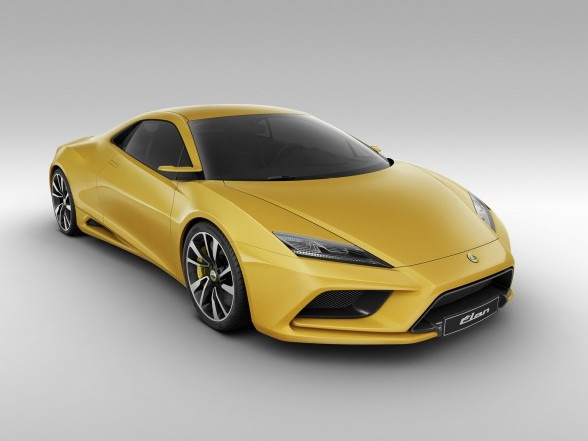
Lotus Elan

In keeping with the rest of the new Lotus range, the Elan features optional hybrid technology with KERS.From a styling perspective, the Elan is built like an athlete with a muscular physique and perfect poise.

As the old saying goes, you can’t have your cake and eat it. In the past we were educated to believe we can’t have it all. But that was the past. Today’s driver demands more and the Lotus Elan delivers. The Lotus Elan is the beating heart of the new Lotus line-up. It’s a high performance sports car, that much is clear, it’s a Lotus after all, but thanks to some clever innovations the Lotus Elan also has everyday usability too. With a 2+2 variant, the Lotus Elan should be the only car you need.

Set for release during the second half of 2013, the Lotus Elan features a 4.0 litre V6 pressure charged engine capable of delivering up to 450 PS and taking into consideration its relative light weight of 1,295kg, the Lotus Elan’s performance edges on supercar. From a styling perspective, the Lotus Elan is built like an athlete with a muscular physique and perfect poise. It’s a thoroughbred, rigid with tension, ambitious and addictive, nothing but best in class will suffice for this car. It’s not enough to simply provide performance and exceptional looks, innovation is also integral to the Lotus Elan’s appeal. In keeping with the rest of the new Lotus range, the Lotus Elan features optional hybrid technology with KERS.

Dany Bahar, Chief Executive Officer of Group Lotus, said:

“If there was ever a car to make you drive the long way home, it’s the Lotus Elan. Perfect for both road and track, the Lotus Elan not only ticks all the boxes, it creates new ones too.”

“The Lotus Elan will convert people to Lotus, I would challenge people not to become addicted to driving it. It will also go a long way towards dispelling the old misconceptions about this class, that in order to have high performance you must sacrifice usability – those days are gone.”

"Once you drive an Lotus Elan you won’t look back, it will give you things you didn’t even realise you were missing – that’s the essence of Lotus and the Elan perfectly captures that spirit.” Read More!

Lotus Eterne

The concept is the new 2015 Lotus Eterne; a true four door, four seater sports GT.It’s the ultimate expression of refined style, sophistication and grace.

Going into production in early 2015, the super saloon will allegedly weigh just 3,968 Lbs, which is pretty light for a big, four-seat luxury car by modern standards. The 5.0-liter forced-induction V8 will kick out 612 HP and 531 Lb-Ft of torque meaning it'll accelerate to 62 MPH in just 4.0 seconds and continue on to that 195 MPH top speed. Amazingly for such a large V8 engine, the redline is pegged at 8,500 RPM.

The hybridization will be an option and maybe an actually good one. The electric motor will be integrated into the gearbox and will use regenerative braking that Lotus ambitiously calls KERS, just like in Formula One, which we suppose is technically accurate, if slightly misleading. We expect nothing more than normal battery storage of electric power, not a fancy flywheel. No word on whether or not the hybrid system will actually add overall power or just reduce city emissions.

Going by current exchange rates, the price for all this is expected to start at $188,000, before the hybrid doodads. Rear-wheel drive will be standard, with an all-wheel drive system available optionally for people who really want to pollute the driving experience. Read More!

Lotus Exige S

The composite rear wing is based on the design from the Exige GT3 road car concept shown at the Geneva Motorshow in 2007. Compared to the 2009 Model Year Exige tailgate mounted wing it is 181 mm wider and mounted 46 mm higher and 61 mm further back. It is attached to the rear bodyshell clam via rear end plates which not only increases the stiffness of the whole structure but also ensures that as much of the airflow as possible passes over the rear wing. This careful airflow management increases stability, reduces drag and, most importantly, maintains the impressive downforce figures of 42 kg at 160 km/h.

The restyled front end includes a larger, more angular air intake mouth to help funnel more air through the radiator, to improve the efficiency of the engine system. Ahead of the front wheels on either side of the main aperture, two larger air intakes increase the airflow to the twin oil coolers. Horizontal vanes bisect these oil cooler air-intakes to stabilise the airflow to further increase the cooling efficiency.
Since the Lotus Exige S2 was launched in 2004, the power has increased from 190 hp through 220 hp to 240 hp in standard road form - more for the track centric Lotus Exige Cup 260 - and the new larger air intakes improve engine cooling for these current higher powered Lotus Exige variants.

Mounted below the three new air intakes is a new aerodynamic splitter for the 2010 Lotus Exige. Made from a lightweight composite, the splitter is now extended to wrap around the whole of the front end and chiseled side lips are raised to deflect air around the tyres to reduce drag.

Mike Kimberley, Chief Executive of Group Lotus plc said, "Over the years, the Lotus Exige has developed a hardcore fan base around the world and its popularity has placed it as one of the legendary sportscars of the 21st century. So far, over 5000 Exiges have been hand-built at our high-tech manufacturing facility making it a significant contributor to our global production. The lightweight Lotus Exige has one of the highest specific power outputs of any globally emissions certified car and 133 hp per litre is a perfect demonstration of Colin Chapman's philosophy of performance through light weight and of Lotus' relentless pursuit of efficiency. The same technology that makes a lightweight car a high performer also makes it efficient - how many cars have performance figures of 0 - 100 km/h in 4.77 secs but produce only 199 g/km CO2?"

Like all Lotus cars, the functional components of the car are also beautifully designed as Russell Carr, Chief of Lotus Design, explains, "For 2010 we have taken the already visually extreme Lotus Exige and given it even more visual drama. The changes we have integrated into the front and rear of the Lotus Exige signal an even clearer and purposeful intent. The purposeful rear wing is race inspired, the new angular air intakes and full width splitter gives a more hard-edged and aggressive look. Overall, the Lotus Exige appears more planted and gives the illusion that both the front and rear of the car are wider than they really are without losing its agile and lithe character."

Roger Becker, Director of Vehicle Engineering said, "The changes we have made to the Lotus Exige for 2010 Model Year are quite subtle when taken individually, but taken as a complete package they make significant improvements to aerodynamics and the overall look of the car. The Exige is a classic fit-for-purpose performance machine, the design tweaks we have made have reduced the drag, cleaned up the airflow around the front and rear of the car, whilst retaining the impressive balanced downforce figures, to give an exciting high performance drive." Read More!

Lotus Elise

The new 2011 Lotus Elise has a number of additional changes and improvements, with the installation of a new advanced 1.6 litre Valvematic engine meeting EURO 5 regulations. This new engine is 200cc smaller than the outgoing Lotus Elise S model and produces similar power (136 PS, 100 kW, 134 hp at 6800 rpm) with maximum torque of 160 Nm, 118 lbft at 4400 rpm, but offers a significant improvement to fuel economy of over 23%, to 6.14 litres / 100km (46 mpg) and a reduction in CO2 emission by more than 13%. This provides the new Lotus Elise with the lowest CO2 per performance for any gasoline high performance sportscar in the world. This high technology engine is mated to a new 6-speed manual gearbox, providing closer and more performance orientated ratios than the outgoing 5 speed box.

The 1.6 litre engine is controlled via the bespoke Lotus T6 engine management system. Cruise control is available on the Lotus Elise for the first time with the controls present on a stalk located to the left of the steering column.

New cast wheels have been designed specifically for the Lotus Elise and the new optional forged wheels weigh just 29.26 kg per set, 2.14 kg lighter than a set of lightweight cast versions. Both are available in silver or black colour.
Dany Bahar, Chief Executive of Group Lotus said, "The Lotus Elise revolutionised the sportscar when it was launched 14 years ago and now the Lotus Elise has become greener, giving drivers access to class leading performance with less guilt."

Donato Coco, Director of Design said, "The Lotus Elise is an iconic sportscar and it was important that we did not complicate its design, so we made the car more pure in its look, improved the aerodynamics, and gave it a more contemporary look with high quality detailing."

Paul Newsome, Director of Lotus Product Engineering said, "We are always looking at ways of keeping the Lotus Elise ahead of its peers and for the 2011 model year we have improved efficiency without losing the innate fun that has made the Lotus Elise legendary."

Andreas Prillmann, Chief Commercial Officer for Lotus Cars said, "In its 14 years of production the Lotus Elise has accounted for 32% of all the 61 years of Lotus production, illustrating how significant to the brand and well loved it is. The 2011 Lotus Elise is greener, purer and more desirable, making it even more relevant to today's marketplace. The new Elise underlines Lotus' reputation as one of the most innovative sports car manufacturers in the world."

Engine

The Lotus Elise introduces the new 1598 cm3, 1ZR-FAE engine, provided by Toyota. The key to this engine's performance and efficiency is the Valvematic system (a variable valve lift mechanism), which is combined with the dual VVT-i (Variable Valve Timing-intelligent). The engine continuously controls intake valve opening/closing timing and the intake valve lift to vary the volume of the intake airflow, giving significant improvements in efficiency and fuel economy. This ensures optimal performance based on the engines operational condition, thus helping the Lotus Elise achieve both high fuel efficiency and high performance.

First of all, the maximum power output is achieved at near maximum revs (engine speed) of 6800 rpm and maximum torque (a respectable 160 Nm, 118 lb.ft) is reached at 4400 rpm. This gives a good combination of mid range pull but also encourages the driver to rev the engine to the maximum permitted engine speed of 7000 rpm (transient rev limit). Like all Lotus Elise sportscars, there are three shift up lights, on the binnacle cumulatively lighting when the driver is getting closer to the rev limiter and when all three are illuminated, they flash to indicate that the driver is almost on the rev limiter so time to change up a gear!

The height of the engine cover has been raised by 34mm to accommodate the taller 1ZR engine compared to the previous 1ZZ engine from the outgoing model due, in part, to the additional Valvematic technology included on the new engine. This has given Lotus engineers an opportunity to subtly redesign the rear engine cover to match the design theme from the front and rear of the car.

Chassis

The Lotus Elise is built around the revolutionary and award winning extruded and bonded aluminium chassis, with a lightweight steel rear subframe. The chassis weighs 68 kg (150 lbs) and has a stiffness of 9,800 Nm per degree, giving a high level of control of the suspension. At the rear, and also acting as a rear energy absorbing crash structure, a lightweight steel subframe carries the engine and gearbox. At the front, the radiator and key ancillaries are mounted into a high tech composite energy absorbing crash structure that is both lightweight, compact and over three times more energy absorbing than the equivalent steel structure.

Ride and handling

The legendary Lotus ride and handling gives a superb high performance, sporty drive, combined with a compliant ride and progressive on limit handling, it makes the Lotus Elise a car that demands to be driven.

The entry level Lotus Elise weighs 876 kg, making it one of the lightest fully homologated sportscars in the world. This low weight translates into efficient performance with minimal environmental impact in terms of emissions and fuel consumption. The efficiency of the Lotus Elise structure means that the 136 PS (100 kW, 134 hp) delivers phenomenal performance.

Few cars can match the delicacy and accuracy of the steering, throttle and brakes of the Lotus Elise and all of these factors contribute to the excellent driving experience of the Lotus Elise.

Safety

The Lotus Elise has high performance AP Racing callipers at the front and Brembo callipers at the rear linked to 282 mm vented and cross-drilled cast iron discs to give excellent stopping power.

The Lotus Elise comes as standard with a track tuned ABS system that is designed to be unobtrusive under normal driving conditions. This system is designed to be used on track and has a high threshold, only intervening in emergencies. Read More!

Lotus Evora

In addition to its excellent performance and exemplary handling, the Lotus Evora offers a more refined ownership experience than Lotus's existing smaller four-cylinder models. Its elegantly styled cabin is elegantly trimmed and its equipment list includes contemporary features such as an advanced touch-screen multi-media system and electric power-fold door mirrors.

Because one of the roles of the Lotus Evora is to attract new customers to the Lotus brand, much attention has been paid to its ease of use. Wider, taller door apertures and narrower sills make getting in and out of the cabin a less athletic undertaking than it is in Lotus's smaller sports cars (the Elise, Exige, Europa and 2-Eleven), while the design of the cabin itself will accommodate two 99th percentile (6ft 5in tall) American males in the front seats.

The 'convenience factor' of the Lotus Evora extends to less obvious areas of the car. For instance, beneath the skin the entire front-end structure is a high tech aluminium sacrificial modular unit, attached to the main extruded aluminium tub. This modular unit is designed to deform for maximum safety, and to reduce repair costs in the event of a frontal impact.
The Lotus Evora has been designed with global automotive regulations in mind, and future derivatives are planed, these including amongst others, a convertible.

The Lotus Evora will be hand crafted and built on a dedicated new assembly line within Lotus's advanced manufacturing facility at Hethel in the east of England; capacity limitations will restrict production to approximately 2000 cars a year, ensuring the dynamic new sports car's rarity and exclusivity.

Mike Kimberley, CEO of Group Lotus plc, has this to say about the exciting new model: "The Lotus Evora is the biggest milestone Lotus has achieved since the Elise was born 13 years ago and is part of our bold five year strategic plan, which includes the introduction of new cars and technologies to many more markets around the world. The Lotus Evora also represents Lotus core values of performance through light weight and efficiency and proves that you can have phenomenal performance, fuel efficiency elegant design and practicality all in a class leading mid-engine 2+2 sportscar, which will meet global safety and homologation standards"

Mike Kimberley continues, "Looking to the future, we will continue to research, develop and produce lighter, more efficient vehicles which are linked to our extensive and well-regarded work on all aspects of future fuels, alternative engines and electric and hybrid vehicle solutions for the future. We all have an environmental responsibility to future generations and the Lotus Evora is another example where Lotus is seen to make significant steps towards improving the efficiency and sustainability of the motorcar keeping Britain at the forefront of the high technology motor industry." Read More!