Showing posts with label Mercedes - Benz. Show all posts

Mercedes-Benz SLK-Class

The new SLK embodies the role of the trend-setter like no other car, says Dr Dieter Zetsche, Chairman of the Board of Management of Daimler AG and Head of Mercedes-Benz Cars. I am convinced that with its passionate design, its high-quality interior and its modesty at the filling station it will continue to provide an enormous amount of fun on the road in future, too, consolidating its status as a cult roadster.

But the new Mercedes-Benz SLK offers more than merely individual highlights. It assumes a leading position in every discipline and offers fun at the wheel in every respect, with no half-hearted compromises. It impresses with characteristics which are generally deemed to be irreconcilable: it succeeds in uniting excellent comfort and high-quality equipment and appointments with a decidedly sporty flair, for instance. At the same time the new roadster is the most economical and thus the most environmentally friendly in its class, also setting new safety standards. And all-weather driving enjoyment - open and closed, in leisure-time and everyday use - is firmly anchored in the SLK's genes.


Timeless aesthetics embodies hallmark sports-car sensuality

The designers have tailor-made a body for the new SLK which emphasises its classic roadster proportions and puts them in the spotlight to thrilling effect. Behind the long bonnet is a compact passenger compartment positioned far back, and a short tail end. The Mercedes-Benz SLK will tempt potential customers with the key attributes that characterise all the classic roadsters from Mercedes-Benz and that have also made many of them automotive icons of the brand.

The first feature to catch the eye is an upright radiator grille that stands proud and confident in the wind and bears the new Mercedes-Benz brand look. It facilitates the long and well-proportioned bonnet and with its rearward light-catching contours it already hints at the roadster's dynamic qualities. The wide radiator grille bears the Mercedes-Benz star in a prominent central position and displays a powerfully contoured fin, chromed at the front. The clearly defined headlamps complete the look for the new SLK's face, which resembles that of the legendary 190 SL from the 1950s, which is regarded by many as being the original "SLK". But it was certainly not just the past that the designers were focusing on; with the new SLK's front end they also intentionally created a close visual link with the new Mercedes-Benz SLS AMG "gullwing model" and the new CLS.
The amazing and measurable proof of the meticulously detailed work that has been carried out is that in spite of the more striking, steeper front and the larger frontal area, the Cd value has been cut to just 0.30 - a brilliant achievement (the predecessor model's Cd value was 0.32).

The timelessly classic shape of the side view with the classic roadster proportions embodies aesthetics of the highest calibre and is a visual promise of the sporti-ness and driving pleasure in store. Fine details and quotes show the care that has been taken by the Mercedes-Benz designers. For example, a fillet conceals the boot joint, so that the side line cannot get in the way, as it usually does with similar roof designs. The ventilation grilles in the front wings with a chromed fin are reminiscent of the famous Mercedes-Benz roadsters of the 1950s. In the new Mercedes SLK they form the perfect starting point for a feature line which flows to the muscular rear wing, using light and shadow to add style and timeless aesthetics to the sides. Meanwhile the upper edge of the wide headlamps - which boast all-LED technology for the first time - also appears to flow into the feature line.

Interior with style and puristic good looks

With the most compact dimensions in its class, the new Mercedes-Benz SLK has an interior whose generous size is exemplary. To achieve this, the designers have developed interior appointments which offer the driver and passenger the highest degree of perfect perceived quality and puristic precision. The interior is characterised by stylish sportiness and high-quality, authentic materials which have been processed with perfect precision and skilled craftsmanship. Even in the base version the centre console and other trim parts gleam in brushed aluminium. Wood can be selected as an option in high-gloss dark brown walnut or high-gloss black ash. Four round, galvanised air outlets integrated in the dashboard emphasise that this model well and truly belongs to the Mercedes-Benz sports car family, their shape being a nod to those in the SLS.

The SLK's generous round dials are flanked by a display for the information generated by the online computer. The colour display for the communications and entertainment functions is housed in the centre of the dashboard, and can be easily read by both the driver and passenger. On the top of the dashboard, also in the centre, sits a fine analogue clock - an unusual detail which subtly underlines the roadster's stylish character.

Other high-quality items of equipment include a multifunction sports steering wheel with a flattened bottom section and a thick leather crown, plus optional sun-reflecting leather which noticeably reduces the degree to which the surfaces it covers heat up, impressive ambient lighting and the innovative neck-level heating system AIRSCARF, familiar from the predecessor.

Unique item of equipment: MAGIC SKY CONTROL

For the first time Mercedes-Benz is offering a choice of three variants of the lightweight-construction vario-roof for the new SLK: In just a few seconds this feature transforms the roadster into a coupé with a "fixed" roof at the touch of a button - and vice versa:

    The base version is a roof painted in the vehicle colour
    Alternatively there is the option of a panoramic vario-roof with dark-tinted windows
    The third variant is a world premiere - the panoramic vario-roof with MAGIC SKY CONTROL. This glass roof switches to light or dark as you wish at the press of a button. When light it is virtually transparent, offering an open-air experience even in cold weather. In its dark state the roof provides welcome shade and prevents the interior from heating up when the sun's rays are very intense. In other words: a feel-good atmosphere at the touch of a button

Innovative draught-stop system AIRGUIDE

A comfortable alternative to the conventional draught-stop is a new pivoting draught-stop for the new Mercedes-Benz SLK which has been invented by Mercedes-Benz aerodynamics engineers. It consists of pivoting transparent plastic layers which are attached to the reverse of the roll-over bars. The driver or passenger can swing them to the centre of the vehicle in a flash, thus taming turbulent air flow.

Spirit and efficiency

There will initially be three models of the Mercedes-Benz SLK-Class available at its market launch, all of them powered by new engines with direct injection. The four-cylinder engines in the SLK 200 BlueEFFICIENCY and SLK 250 BlueEFFICIENCY develop 135 kW (184 hp) and 150 kW (204 hp) respectively from a displacement of 1796 cubic centimetres. The SLK 200 BlueEFFICIENCY is the most economical roadster in its segment. With the enhanced, optional seven-speed automatic transmission 7G‑TRONIC PLUS it consumes just 6.1 litres of premium petrol (NEDC, combined) over 100 kilometres (that corresponds to 142 g of CO2 per kilometre). The frugal model sprints from 0 to 100 km/h in 7.0 seconds, and achieves its top speed at 237 km/h (240 km/h with manual transmission).

The SLK 250 BlueEFFICIENCY is equipped as standard with the 7G-TRONIC PLUS automatic transmission and consumes only 6.2 litres (NEDC, combined) over 100 kilometres (144 g of CO2 per kilometre). From a standstill it reaches 100 km/h in 6.6 seconds, and it has a top speed of 243 km/h.

The V6 engine in the SLK 350 BlueEFFICIENCY draws 225 kW (306 hp) from its 3498 cubic-centimetre displacement, using this power to accelerate in 5.6 seconds from 0 to 100 km/h (top speed 250 km/h). Its consumption is 7.1 litres (NEDC, combined) over 100 kilometres (167 g of CO2 per kilometre). The V6 engine has been completely newly developed. Its most important hallmarks are its 3rd-generation direct injection, piezo injectors and multi-spark ignition.

The exemplary efficiency, with fuel consumption reduced by up to a quarter compared with the predecessor models, is also due to the ECO start/stop system which is fitted as part of the standard specification in all models.

Suspension for the closest link with the road

There are also three suspension versions to choose from:

    A conventional steel suspension comes as standard
    A sports suspension with harder springs and dampers ensures a systematically sporty driving experience
    As an alternative a Dynamic Handling package is available. Its merits include a suspension with continuous adjustable damping. It has an electronically controlled fully automatic damping system, so the vehicle rolls away gently even on poor road surfaces, but still offers high driving dynamics

Also included in the Dynamic Handling package are a Direct-Steer system and the Torque Vectoring Brakes developed by Mercedes-Benz. The Direct-Steer system offers more handling and agility than the standard steering, whilst also reducing the amount of physical effort required when parking. In critical conditions the Torque Vectoring Brakes produce a defined rotational movement of the vehicle about the vertical axis in fractions of seconds through selective brake actuation at the rear wheel on the inside of the bend. This results in the Mercedes-Benz SLK stabilising without any compromises where dynamism is concerned, and it steers into the bend precisely and under full control.

Ingenious material mix and high levels of safety

The new SLK's bodyshell structure has been further refined, with the bonnet and wings now made of aluminium.

The new Mercedes-Benz SLK also sets new benchmarks in terms of safety. The third generation of the powerful trend-setter will make use of a whole host of the latest assistance systems to support the driver, including the drowsiness detection system ATTENTION ASSIST, developed by Mercedes-Benz and fitted as standard; the optional anticipatory occupant protection system PRE-SAFE®, which is unique in the world; and the PRE-SAFE® Brake, which can apply the brakes autonomously in the event of an impending rear-end collision. As such, with the SLK too Mercedes-Benz is consistently and significantly exceeding the requirements imposed by safety standards. Read More!

Mercedes-Benz E-Class


Mercedes-Benz has improved the already exemplary long-distance comfort of the Mercedes-Benz E-Class even further in the new saloon, including intelligent bodyshell technology with up to 30 percent greater rigidity, further improved seats and a newly developed suspension whose shock absorbers automatically adjust to the current driving situation. The optional air suspension now works together with an electronic damping system.

The outstanding safety and comfort of the Mercedes-Benz E-Class are matched by its environmental compatibility and economy: the four- and six-cylinder engines are direct-injection units, and consume up to 23 percent less fuel than before. The combined NEDC consumption of the new four-cylinder diesel engines is just 5.3 litres per 100 kilometres, which corresponds to 139 grams of CO2 per kilometre. All the engines for the new E-Cass meet the EU5 emission standard, and in the case of the E 350 BlueTEC the emissions are already below the EU6 limits planned for 2014 .

Apart from the engines, the BlueEFFICIENCY package for the Mercedes-Benz E-Class is in large part responsible for a considerable fuel saving. Engineers from every development department have worked together to optimise assemblies and components, to save fuel by means of reduced weight, a new form, improved functioning or efficient energy management.

The work done in the wind tunnel was particularly successful, for with a drag coefficient of only 0.25, the new Mercedes-Benz E-Class is the world's most aerodynamically efficient luxury saloon. It betters the already good Cd figure of the preceding model by another four percent, which represents a fuel saving of around 0.25 litres per 100 kilometres when driving at a motorway speed of 130 km/h. The aerodynamics are for example improved by variable fan louvres, which control the airflow to the engine compartment in line with requirements.

Other BlueEFFICIENCY measures include newly developed tyres with up to 17 percent lower rolling resistance, energy-saving control of the generator, fuel pump, air conditioning compressor and power steering, and the ECO start/stop functionwhich switches the engine of the new E 200 CGI off when idling. Displays in the speedometer inform the driver how much fuel is being consumed (per 100 kilometres), and when he should shift to the next higher gear in the interests of an economical and environmentally conscious style of driving.

The range of engines available for the new Mercedes-Benz E-Class comprises four, six and eight-cylinder units with outputs from 100 kW/136 hp to 386 kW/525 hp. The four-cylinder engines are newly developed direct-injection units, which develop a higher output and torque than the comparable V6-engines of the preceding series despite a smaller displacement. The strategy is to replace to replace large, naturally aspirated engines with turbocharged units which excel with advantages such as lower weight, reduced internal friction and more economical operating characteristics.

Engines: new CDI-four-cylinder units with a fuel consumption of just 5.3 litres and 139 grams of CO2 per kilometre

With three completely newly developed four-cylinder engines, the Mercedes-Benz E-Class also remains one generation ahead where diesel technology is concerned. These engines feature latest-generation common-rail direct injection, fast piezo-electric injectors, improved exhaust gas recirculation and an innovative twin turbocharger, making for fast responsiveness and good performance characteristics. To express this in figures, the E 250 CDI with 150 kW/204 hp and 500 newton metres develops a 25 percent higher torque than the previous V6 diesel engine, but uses around 23 percent less fuel at only 5.3 litres per 100 kilometres (combined NEDC consumption). This corresponds to 139 grams of CO2 per kilometre.

The new four-cylinder diesel engine also powers the E 220 CDI with 125 kW/ 170 hp and the E 200 CDI with 100 kW/136 hp, also with a fuel consumption of only 5.3 litres per 100 kilometres.

The top model in the new Mercedes-Benz E-Class diesel range is the six-cylinder E 350 CDI with an output of 170 kW/231 hp, which uses 0.5 litres per 100 kilometres less fuel than the previous E 320 CDI. From autumn 2009 the V6 diesel will also be available as a BlueTEC model with the world's best emission control technology. The E 350 BlueTEC develops 155 kW/211 hp and meets the EU6 exhaust emission standards planned for 2014. All the other engine variants in the new Mercedes-Benz E-Class meet the EU5 limits.

Petrol engines: 20 percent fuel saving thanks to direct injection

The E 200 CGI and E 250 CGI are equipped with the newly developed four-cylinder direct-injection engine with a displacement of 1.8 litres, turbocharging and variable intake and exhaust camshafts. The E 200 CGI (135 kW/184 hp) is equipped with a six-speed manual transmission and the ECOstart/stop function as standard, and consumes only 6.8 litres of premium petrol per 100 kilometres (combined NEDC consumption, provisional figure). This equates to 159 grams of CO2 per kilometre.

In the E 250 CGI (150 kW/204 hp), which has a five-speed automatic transmission as standard, maximum torque is now 310 newton metres, which represents an increase of more than 26 percent over the previous V6-engine. At the same time the NEDC fuel consumption is reduced by over 20 percent to 7.4 litres per 100 kilometres, equating to 175 grams of CO2 per kilometre (provisional figures).

As before, the E 350 CGI with direct petrol injection (215 kW/292 hp) and the top-of-the-line E 500 (285 kW/388 hp) are included in the range of engine variants in the new Mercedes-Benz E-Class. Detailed improvements have reduced the fuel consumption of these V6/V8 models by up to 0.6 litres per 100 kilometres. As a product from Mercedes-AMG, the new high-performance E 63 AMG develops 386 kW/525 hp.

The V6 and V8-models are equipped with a seven-speed automatic transmission and steering wheel selector lever as standard.

On request the V6 models E 350 CDI and E 350, as well as the eight-cylinder E 500, are available with latest-generation Mercedes all-wheel drive. This system distinguishes itself from previous all-wheel drive technology with greater efficiency, lower weight and more compact construction. These advantages produce noticeably better traction and fuel savings.

Safety: "Intelligent" partner thanks to unique combination of assistance and protection systems

For more than 50 years, the saloons in the Mercedes-Benz E-Class and their predecessors have been acknowledged as trendsetters in the safety field. The new saloon continues this tradition with an unrivalled combination of the very latest assistance and protection system whose concept and development are based on what actually happens during accidents. These technologies make the Mercedes-Benz E-Class an "intelligent partner"who can see, feel, react reflexively in critical situations and if necessary act independently to prevent accidents or mitigate their consequences. With this concept the new Mercedes model not only protects its own occupants, but also contributes decisively to the greater safety of other road users.

The new Mercedes-Benz E-Class is the first automobile in the world whose headlamps adapt to the traffic situation and respond automatically to avoid dazzling other drivers. The optional Adaptive Main Beam Assist uses a camera on the windscreen to recognise oncoming traffic and vehicles moving ahead, and controls the headlamps so that their beams do not reach the other vehicle. This achieves the best possible road illumination in a given situation. The range of the dipped headlamp beams can be extended from 65 to up to 300 metres. If the road ahead is clear, the system performs a gentle transition to high beam.

Mercedes-Benz offers this new system as a light & sight package that includes bi-xenon headlamps, the Intelligent Light System and LED daytime driving lights.

The Lane Safety package for the new Mercedes-Benz E-Class includes Blind Spot Assist familiar from the S-Class, and as a new development, Lane Keeping Assist which seeks to prevent the vehicle from leaving the road unintentionally. When the system recognises that the car is drifting from its lane, the driver is prompted to take countersteering action by brief but unmistakable vibrations of the steering wheel. The images from the windscreen camera are also used by the new, optionally available Speed Limit Assist , which recognises speed limit signs as the car passes them, then displays the relevant speed limit in the speedometer.

Night View Assist from the S-Class is now also available as an optional extra for the new Mercedes-Benz E-Class. Mercedes-Benz has improved this system with a special pedestrian detection function: as soon as Night View Assist Plus recognises pedestrians ahead of the car, they are highlighted in the onboard display to provide a greatly enhanced warning effect.

Detection of drowsiness based on 70 parameters as standard

Thanks to an innovative technology, the new Mercedes-Benz E-Class has developed a highly sensitive means of monitoring its driver's attention level, and warns him of drowsiness in good time. This new ATTENTION ASSIST drowsiness detection system, which is standard equipment, is equipped with highly sensitive sensors that continuously monitor more than 70 different parameters. Observing the driver's steering behaviour has proved to be a particularly strong indicator: several years of practical research by Mercedes engineers have shown that drowsy drivers make minor steering errors that can often be rapidly corrected in characteristic ways. These corrections are recognised by a highly sensitive steering angle sensor.

Automatic emergency braking when a collision is imminent

The well-proven, radar based assistance systems from the S-Class are now also optionally available to Mercedes-Benz E-Class customers. A further development of the long-range radar sensor now has a range of 200 metres (previously 150 metres), and is able to monitor the mid-distance so that dynamic events such as a vehicle ahead suddenly pulling out to overtake can be detected even more effectively. The two wide-angle short-range radar sensors, which have a range of around 30 metres, continue to be included in the system.

The radar-supported systems are able to assist the driver with emergency braking. Their sensors are linked to the Brake Assist PLUS system, which automatically calculates the braking pressure to prevent a collision in critical situations. The driver is given an acoustic and visual warning at the same time. When the brake pedal is depressed, the system immediately activates the calculated level of braking assistance.

If the driver fails to respond to the warnings, the radar system first initiates partial braking action. As a second stage, if there is still no driver response and a collision is unavoidable, emergency braking is initiated. This can considerably lessen the severity of an accident, i.e. the system acts as something like an "electronic crumple zone".

Active bonnet, seven airbags and PRE-SAFE® as standard

During the course of its development, the new E-Class was subjected to more than 150 high-speed crash tests and a total of more than 17,000 realistic crash simulations. The crumple zone principle invented by the Mercedes safety pioneer Béla Barényi has been continuously improved by the engineers in Sindelfingen. The front-end deformation zone of the Mercedes-Benz E-Class acts on four independent levels, and is even more effective than before. The increased use of highest-strength steel alloys also helps to ensure that the bodyshell is able to withstand high impact forces. Around 72 percent of all the body panels are made from these high-tech steels - yet another unrivalled figure in passenger car development.

With seven airbags as standard, belt tensioners, belt force limiters, crash-responsive head restraints and ISOFIX child seat attachments, the new Mercedes-Benz E-Class has even more extensive safety features than the preceding model. Another new feature is the active bonnet, which is a continuation of many years of commitment to pedestrian protection on the part of Mercedes-Benz. It is standard equipment in the new E-Class. In the event of an impact, a system of springs raises the rear section of the bonnet by 50 millimetres within fractions of a second, thereby increasing the available deformation space. Thanks to the cleverly conceived mechanism, the driver is able to reset the active bonnet to its normal position himself, without visiting a workshop.

Another standard feature is the preventive occupant protection system PRE-SAFE®. In potentially hazardous situations this reflexively activates precautionary protective measures for the vehicle occupants, so that the seat belts and airbags are able to fulfil their protective function to the full during an impact.

Comfort: Further progresses with adaptive shock absorbers and improved air suspension

As in the safety field, the Mercedes-Benz E-Class has been setting the standards for long-distance comfort in this vehicle class for several decades. Bettering the already high level of the preceding series, Mercedes engineers have achieved further advances with the new saloon - especially where ride, seating and climatic comfort are concerned.

Standard equipment includes a further improved suspension with adaptive shock absorbers. These automatically adapt to the current driving situation by reducing the damping forces when driving normally, thereby noticeably improving ride comfort. When taking bends at speed or during rapid evasive action, the system switches to the maximum damping effect so that the saloon is stabilised to best effect.

A version with dynamic damping characteristics and a lowered suspension is available as an optional alternative to the standard suspension (standard for the AVANTGARDE line).

The air suspension system optionally available for the V6 models (standard in the E 500/E 500 4MATIC) has for the first time been combined with an electronically controlled damping system, which processes various sensor signals and controls each wheel independently. In this way Mercedes specialists have achieved significantly better ride comfort while improving handling safety and agility at the same time. The driver is able to select either comfort or sport mode at the touch of a button.

Well-proven seat technology with a new design

Where seat development is concerned, Mercedes-Benz had added a new quality to a well established Mercedes concept, namely padded seat piping - a sophisticated and demanding upholstery technique that is only used by Mercedes-Benz. This involves the insertion of an additional foam filling under the fabric or leather cover, and gives an immediate feeling of comfort and wellbeing when sitting in the car. There are different versions of this padded seat piping: in the basic model and AVANTGARDE line the upholstery is transversely contoured, while the ELEGANCE line has longitudinal piping and is reminiscent of the well-known and highly effective Mercedes seat design from the 1960s and 70s.

Active multicontour seats with massage function from the S-Class

The active multicontour seat package (optional) includes newly developed multicontour seats with comfort head restraints and a two-stage massage function in the backrest that has proven highly successful in the S-Class. Depending on the steering angle, lateral acceleration and vehicle speed, fast-acting piezo-electric valves on the air chambers in the backrests vary their pressure and volume to give the driver and front passenger even better lateral support.

On request the Mercedes-Benz E-Class is also available with a rear seat unit consisting of two comfortable, single seats. This rear-seat comfort package includes seat heating, leather upholstery, a centre console, comfort head restraints, roller blinds in the rear doors, an electrically operated roller blind for the rear window, comfort sun visors and a through-loading facility to the boot.

Individual climatisation modes at the touch of a button

Mercedes-Benz has developed a climate control system for the E-Class which not only allows individual temperatures to be set in three zones - for the driver, front passenger and rear passengers - but also offers different "climatisation modes". If this optional THERMOTRONIC system is specified, the occupants of the new E‑Class are able to select "Diffuse", "Medium"or "Focus"at the touch of a button, and adapt the air volume and distribution to their personal preferences without sacrificing the convenience of automatic mode. In standard trim the new Mercedes-Benz E-Class is equipped with the two-zone THERMATIC automatic climate control system.

Design: Distinctive lines flow as an expression of effortless grace and status

In 1995 the Mercedes-Benz E-Class was the first Mercedes model to appear with the highly acclaimed twin-headlamp face - a highly symbolic design feature that still characterises the identity of the E-Class. Nonetheless, the design idiom has remained fluent even for this characteristic styling feature, and has been adapted to suit the self-assured, masculine overall appearance of the saloon. The designers have now reinterpreted these four "eyes"as rectangles, with a direct reference to the interesting geometrical shapes found in cubism. They have the effect of precious gems that have been precisely set into the wings. In the same way, the radiator grille with its three-dimensional chromed surround, dynamic arrow-shape and more upright position underlines the status of the car as the epitome of a business saloon.

A sophisticated interplay between lines and surfaces is one of the hallmarks of today's Mercedes design. Large concave or convex surface areas are structured by taut, clearly defined lines. This design concept has been perfected down to the last detail in the new Mercedes-Benz E-Class. The flank contours become connecting features that influence the entire body design, i.e. not just the side aspects but also the front and rear-end styling.

At the rear this harmonious flow culminates in a new feature, namely a graceful line that follows the rear wheel arches and lends a clear shape to the imposing, muscular contours of the rear wings. Here Mercedes aficionados will recognise styling features reminiscent of the famous "Ponton Mercedes" introduced in 1953, which already emphasised its sovereign character with these striking contours at the time - a symbolic feature, and at the same time a hallmark of the Mercedes-Benz E-Class that well illustrates how tradition is made to harmonise with the future in this model series.

With typical Mercedes attention to detail, the designers have also given great attention to the interior of the new Mercedes-Benz E-Class, ensuring that every feature appeals in both emotional and functional terms with its form, colour or material. The result is a harmonious whole - an atmosphere in which the car's occupants immediately feel safe and protected, and long journeys can be taken without any feeling of effort or stress. In short: Typically Mercedes-Benz E-Class, welcome home.

Model range: High level of standard appointments and individual variants

Individuality and variety have always been two of the outstanding attributes of the Mercedes-Benz E-Class. The new saloon not only provides Mercedes customers with a choice of ten engines and three suspension variants, but also two design and equipment lines, 12 wheel/tyre combinations in 16, 17, 18 or 19-inch size, twelve exterior paint finishes and six different seat upholstery materials in up to five colour combinations to suit their individual preferences. The choice of interior trim has been doubled versus the preceding series, with the range now including high-gloss exotic wood, open-pored wood and aluminium trim.

Standard specifications already include 16-inch light-alloy wheels in a nine-spoke design, eucalyptus or embossed aluminium trim (optional) and a four-spoke multifunction steering wheel lined in fine nappa leather with chrome inserts. Also included in the standard equipment is the Audio 20 CD infotainment system with a twin receiver, CD-player, eight loudspeakers and a Bluetooth interface for a mobile phone. The colour display in the centre of the dashboard can be operated by the driver or front passenger, using the Controller on the centre console.

The individualisation programme for the Mercedes-Benz E-Class is based on two design and equipment lines. The ELEGANCE line lives up to its name with a decidedly elegant, classic appearance. This is in part due to additional features such as a chrome-plated radiator grille with four silver-painted louvres, 16-inch light-alloy wheels in a ten twin-spoke design, burr walnut trim and stylish ambient lighting with fibre optics that frame the dashboard and door panels.

In contrast the AVANTGARDE line shows the Mercedes-Benz E-Class in a decidedly modern and innovative light. This is ensured by additional standard features such as bi-xenon headlamps with the Intelligent Light System and LED daytime driving lights, LED technology for all the rear lights, 17-inch light-alloy wheels in a five twin-spoke design, a special, lowered suspension setup, ambient lighting and the instrument cluster in a sporty tubular design. This model variant is also distinguishable by its different bumper design and a chrome-plated radiator grille with three glossy, black louvres. Read More!

Mercedes-Benz C-Class

Mercedes-Benz C-Class won the award for Best Small Luxury Sedan in Autobild Award 2010, an assessment of the best car magazine Autobild Indonesia edition, which was announced Tuesday (16/11), in Jakarta.

The success of the C-Class won the award complements a boon Best Premium Sedan and Fastest Car, which last week granted in Indonesia Motor Car magazine Car of the Year 2010.

"A Mercedes-Benz honor to receive this award. C-Class has proved himself not only as a premium sedan fully, but also the best in its class, "said President & CEO of Mercedes-Benz Indonesia Rudi Borgenheimer.

Rudi add this award is exciting because it was given recognition by the media who have the capability and professionally capable of judging the best cars.
To market Indonesia Indonesia PT Mercedes-Benz C-Class to market the latest in a choice of three engine types, namely C 200 CGI, C250 CGI, and C 300. The fourth-generation sedan was first coded W204 diniagakan in the country in July 2007.

Including these three awards, during the year 2010 C-Class has won four prestigious awards in Indonesia. Previous award for the C-Class provided the magazine Autocar Indonesia in 2010 Reader Choice Awards with honors Favorite Compact Executive Saloon.

In the passenger vehicle market in Indonesia C-Class has achieved success by collecting the total sales from January to October 2010 reached 1169 units.

The amount is comparable with the control segment of the market by 70 percent. Meanwhile, the growth rate of the C-Class sales in the first 10 months of 2010 has increased 20 percent over the same period in 2009. Read More!

Mercedes-Benz B-Class Coupe

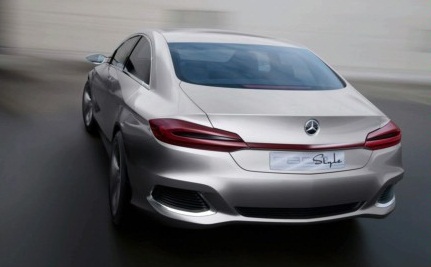
Mercedes-Benz B-Class Coupe & Crossover has been confirmed recently, it was based on the platform of the MFA. In addition to the interior A-Class and B-Class Featured potential.

Coupe is a relative term as the model is expected to be a "four door coupe" in the same vein as the CLS. Regardless, the car is scheduled to be launched in 2013 and will likely resemble Style F800 concept that debuted at last year's Geneva Motor Show.

Additional information is scarce, but the choice of engine is rumored to include PS 204 (150 kW / 201 hp) 1.8-liter four-cylinder petrol and 2.2-liter four-cylinder diesel with 170 PS (125 kW / 168 hp). In addition to the coupe and crossover, the third variant - may brake conversion or shooting - will be offered in Europe, but a decision on U.S. availability is still pending. Furthermore, if you're not a fan of tri-pointed star, Infiniti also interested in using the platform MFA has not finished as of yet. Read More!

Mercedes SLS AMG

The new super sports car from Mercedes-Benz and AMG makes for an alluring proposition with its unrivalled technology package: aluminium spaceframe body with gullwing doors, AMG 6.3-litre V8 front-mid engine developing 420 kW / 571 hp peak output, 650 Nm of torque and dry sump lubrication, seven-speed dual-clutch transmission in a transaxle configuration, sports suspension with aluminium double wishbones and a kerb weight of 1620 kilograms based on the DINstandard - this superlative combination guarantees driving dynamics of the highest order. The ideal front/rear weight distribution of 47 to 53 percent and the vehicle's low centre of gravity are testimony to the uncompromising sports car concept. The 'Gullwing' accelerates from 0 to 100 km/h in 3.8 seconds, before going on to a top speed of 317 km/h (electronically limited). The fuel consumption of 13.2 litres per 100 kilometres (combined) puts it at the front of the competitive field (all figures provisional).

"Mercedes-Benz is presenting an exhilarating super sports car in the guise of the Mercedes-Benz SLS AMG, which is bound to set the pulses of all car enthusiasts racing that extra bit faster. The brands Mercedes-Benz and AMG have joined forces to create the Mercedes-Benz SLS AMG - which is set to become one of the most alluring sports cars of all time", says Dr. Dieter Zetsche, Chairman of the Board of Management of Daimler AG and Head of Mercedes-Benz Cars.

"Our customers will experience with the Mercedes-Benz SLS AMG the expertise of Mercedes-AMG, built up over 40 years of motor racing. The unrivalled technology package delivers outstanding driving dynamics coupled with moderate fuel consumption figures - part and parcel of the modern-day AMG," says Volker Mornhinweg, Chairman of Mercedes-AMG GmbH.

"The styling of the new Mercedes-Benz SLS AMG is not only very special because of the exclusive gullwing doors. Our aspiration is to utilise this interpretation to create the classic of tomorrow and roll out the most alluring sports car of the 21st century. Our aim is also to create a new design icon, which shapes the incomparable legend of our brand, alongside Mercedes models like the CLS or the SL. At the same time, the new Mercedes-Benz SLS AMG paves the way for the design philosophy of forthcoming Mercedes-Benz sports cars", says Gorden Wagener, Head of Design at Mercedes-Benz Cars.

Design: purist, distinctive and passionate

The distinctive styling of the new Mercedes-Benz SLS AMG enthrals with its passionate sportiness and reinterprets the breathtaking lines of the Mercedes-Benz 300 SL - one of the outstanding design icons of the Mercedes-Benz brand. With its purist design the new SLS AMG reflects the philosophy of contemporary sports car engineering: the bonnet which measures just under two metres, the low greenhouse positioned well to the rear and the short rear-end with an extendable aerofoil are just as powerful a reminder of the superlative dynamism as the long wheelbase, the wide track and the large wheels. The short overhangs feed through into the proportions, just as does the design of the super sports car with its low-slung front-mid engine set well back and dual-clutch transmission in transaxle configuration. An undoubted styling highlight comes courtesy of the gullwing doors which lend the Mercedes-Benz SLS AMG its incomparable charisma - making a unique statement in this vehicle segment.

The gullwing doors are not alone in rekindling memories of the Mercedes-Benz 300 SL; the hallmark wide radiator grille with the large Mercedes star and the wing-shaped cross fins are a throwback to the front-end of the sports car legend. The three-dimensional, sculptured front-end with its low-set, swept-back front apron set well into the sides lends the 'Gullwing' its powerful stance on the road. Six large cooling air intakes and the vertically arranged headlamps set well to the outside with their alluring inner ambience provide a dominant aura: the central bi-xenon low-beam headlamp with its metallic wing section is framed at the top by two LED indicators and the LED daytime driving lights at the bottom.

Influences from aircraft construction

Allusions to aircraft construction come courtesy of the prominent Mercedes star, whose tubular section is reminiscent of the air intake on a jet engine when viewed from the side, as well as the long bonnet: as the eye is drawn forward, so the observer becomes more aware of the curve. The design of the four fins with their Silver Shadow finish that adorn the two air outlet grilles on the end of the bonnet create the same visual impression. These aircraft-style lines also visually accelerate the air that flows past - and make the Mercedes-Benz SLS AMG appear extremely dynamic even while stationary.

The fins on the bonnet are taken up on the vehicle flanks: the connoisseur also discovers here a hallmark styling feature of the 300 SL. The "6.3" lettering placed between the fins provides a clear reference to the high-displacement naturally aspirated V8 engine. The side air outlet feeds through into a stylistically prominent feature line, which together with the convex flanks and the exhilarating surface treatment, combines aesthetics with power. The compact passenger compartment proves as alluring as it is unmistakable. With its high beltline, low side windows and steeply angled windscreen it comes across as a kind of visor. The forward angled B-pillar with its stylish flowing sweep to the rear window exudes pure dynamism.

Side view dominated by muscle and shoulder

Seen from the side, the eye is drawn to the prominent vehicle shoulder of the Mercedes-Benz SLS AMG, which stretches like a taut muscle from the front to the rear. Distinctive 19-inch (front) and 20-inch (rear) light-alloy wheels fill the wheel arches, which stand out prominently from the sidewall. Three different wheel variants all provide a glimpse of the large high-performance composite brakes. Seen from above, a prominent, uninterrupted line runs from the muscle to the rear. This styling feature is also picked up on the bonnet where the eye follows a distinctive contour which flows over the roof between the gullwing doors, right through to the third brake light.

Rear view that emphasises width

The rear view of the Mercedes-Benz SLS AMG also exudes dynamism and power: the gently sloping boot lid emphasises a sense of width, an impression reinforced by the prominent vehicle shoulder and the sleek tail lights: fitted with LED technology, the horizontally structured lighting units provide a scintillating view. Wing-shaped LED lighting elements ensure a distinctive, enthralling night design. The Formula-1-style LED fog lamp/reversing light is set down low in the centre. Similarly inspired by motor racing are the black diffuser insert and the two chromed tailpipes of the sports exhaust system. The strikingly tapered rear apron provides an unimpeded view of the wide rear wheels, lending the 'Gullwing' its self-assured stance on the road. The spoiler integrated in the boot lid is automatically deployed from a speed of 120 km/h to ensure optimum stability at high speeds.

New colours: "AMG ALU-BEAM silver" and two matt finishes

The colour charts for the Mercedes-Benz SLS AMG include nine exclusive paint finishes. The highlight comes in the shape of the unique "AMG ALU-BEAM silver" paintwork: the new, unique process makes the paint shine like liquid metal. The paint covers the body panels like a metallic skin, emphasises the scintillating design lines of the 'Gullwing' more strongly than any previous paint job and makes them even livelier by means of targeted light reflections. This effect is made possible thanks to tiny pigments measuring between 30 and 50 nanometres.

The two matt finishes "designo magno allanite grey" and "AMG magno sylvanite grey" are just as eye-catching: with their matt silk surface they reinforce the sporty character of the two-seater through specific contouring of the crease lines.

Interior with allusions to aircraft construction and motor sports practicality

You only need to open the gullwing doors on the Mercedes-Benz SLS AMG and ease into the sports seats to experience a whole new level of interior. The Mercedes-Benz designers took their inspiration from aircraft construction when styling the interior - immediately bringing an aircraft cockpit to mind. The characteristic styling feature is the dashboard, whose powerful and dramatic wing shape makes for an impression of width. Strikingly integrated into the dashboard are the galvanised air vents with their adjustable, cruciform nozzles and Silver Shadow finish - their shape reminiscent of a jet's engines. The instrument cluster with its LED upshift indicator and two white backlit dial instruments add another decidedly sporty touch with their metallic Silver Shadow finish. The silver dials have red needles and a 360 km/h speedometer scale. As a central feature of the cockpit, the COMAND APSmultimedia system with its 7-inch screen is integrated between the two centre air vents.

The elongated centre console in matt metal similarly picks up on the design theme of the aircraft cockpit. It is home to the AMG DRIVE UNIT, which is inclined towards the Mercedes-Benz SLS AMG driver and allows them to choose their very own vehicle setup. The E-SELECT shift lever, whose styling recalls the thrust control of a jet, controls the AMG SPEEDSHIFT DCT 7-speed sports transmission. All the controls are made out of solid metal, with a high-sheen Silver Shadow surface.

The concave inner panels of the gullwing doors, the high beltline and the powerful side sill panels round off the cockpit-like impression, while imparting a feeling of sports car-like ergonomics. Fine materials such as nappa leather, solid metal and (optional) genuine carbon-fibre facings underline the pronounced "custom-built" nature of the Mercedes-Benz SLS AMG interior, and show enormous attention to detail. Five different designo leather colours are available to meet individual preferences: black, classic red, sand, porcelain and light brown.

Wide-opening gullwing doors for easy entry

Despite the low sitting position of just 369 millimetres in typical sports car fashion, the wide-opening gullwing doors make it easy to get in and out of the vehicle. At the design stage great attention was paid to the widest possible opening angle - it is a full 70 degrees. Equally importantly, the distance between the open doors and the road surface is a generous 1.50 metres, while the entry aperture between the open doors and the upper edge of the door sills measures no less than 1.08 metres. The entrance height, i.e. the distance between the road surface and the upper edge of the door sills is a very low 45 centimetres. As another important criterion for dignified access and egress, two gas-pressure struts positioned next to the door hinges require only very little pressure when opening and closing the doors - even at very low ambient temperatures.

The gullwing doors require less opening space than conventional coupé doors, and can be fully opened in a normal garage. The door is opened from inside by a handle finished in Silver Shadow. The grip section of the armrest moulded into the interior door panel ensures problem-free door closing. The operating buttons for the power windows, central locking system and exterior mirror adjustment are also located in the interior door panels for easy access. The feeling of comfortable spaciousness is in large measure due to the generous shoulder-room of 1483 millimetres and elbow room of no less than 1606 millimetres. In conjunction with the generous maximum headroom of 990 millimetres and effective legroom for the driver of 1058 millimetres, the result is a low but extremely relaxed seating position. At the same time the intentionally steep angle of the windscreen ensures good all-round visibility for the passengers.

Sports seats with magnesium backrests

The sports seat backrests are made from magnesium, a high-tech material that combines light weight with high strength. This leads to significant advantages where weight distribution and a low centre of gravity are concerned. The sports seats feature so-called two-zone seat cushions. Prominent side bolsters with a harder foam filling provide optimal lateral support, while the inner areas of the seat cushion and backrest are softer for a high level of comfort on long journeys. In conjunction with the Memory package (optional), the fore-and-aft position, seat height, backrest angle, squab angle and steering column are electrically adjustable; three individual settings can also be stored.

Four-way lumbar supports reliably protect the lower spine, while adjustable side bolsters in the backrests effectively improve lateral support on fast bends. Three-stage seat heating and seat occupancy/child seat recognition in the passenger seat are also standard equipment.

The sports seats with integrated head restraints and sporty transverse fluting are upholstered in designo leather - and two-tone seats are also available in classic red, sand and porcelain. If light brown is chosen as an interior colour, the sports seats are upholstered in natural leather with particularly high-quality woven leather on the centre seat panels. Depending on the colour combination, fluorescent or black piping provides another sporty touch.

The Performance leather steering wheel in a three-spoke design has a 365-millimetre rim with a flattened lower section, shift paddles and a metal insert, underlining the authentic custom-built look and ensuring the best possible vehicle control.

A host of stowage space for hallmark Mercedes day-to-day suitability

The interior of the Mercedes-Benz SLS AMG also impresses with the practical stowage space that makes for the day-to-day suitability typical of a Mercedes. The 3.7-litre glove compartment with a spectacles section is integrated into the dashboard on the passenger side. To the right of the E-SELECT shift lever there is a small stowage tray with a 12 V socket, or an ashtray with cigar lighter. The armrest behind the centre console not only serves to operate the COMAND Controller: at the touch of a button, the armrest can be moved in two stages to reveal a stowage compartment underneath. This has two cupholders and the telephone cradle (optional), and a holder for the ignition key in the rear section. Other items can be stowed on the rear wall between the seats and in the parcel net in the passenger footwell. Two fixed clothes hooks are attached to the seat backrests, while those in the roof liner fold down and are silicon-insulated.

The button to unlock the boot lid is located underneath the light switch. Alternatively the boot can be opened using the ignition key. The luggage compartment can hold up to 176 litres. A made-to-measure luggage set is available as an option, which enables the boot space to be used to full advantage.

Aluminium spaceframe for lightweight design and outstanding strength

The Mercedes-Benz SLS AMG is also breaking the mould when it comes to the body concept: for the first time, Mercedes-Benz and AMG are presenting a car with an aluminium chassis and body. Compared with the traditional steel design, this results in a significant weight saving, clearly illustrated in the DIN kerb weight of 1620 kilograms.

The newly developed bodyshell comprises an aluminium spaceframe. This exclusive design combines intelligent lightweight design with outstanding strength - thus delivering superlative driving dynamics. Lightweight aluminium sections connect the force nodes to a sturdy structure. The large, low-set cross-sections of these aluminium sections ensure high resistance torque, thus providing the required direct transfer of drive, braking and suspension forces. The structure prevents unwanted flexibility; the vehicle responds rigidly, almost without twisting and directly.

45 percent of the intelligent, weight-optimised aluminium spaceframe is made out of aluminium sections, 31 percent out of aluminium sheet, 20 percent out of aluminium cast and 4 percent out of steel. Maximum occupant safety requires the use of ultra-high-strength, heat-formed steel in the A-pillars. The bodyshell weighs 241 kilograms - an absolute benchmark in the super sports car segment when compared with the peak output of 420 kW/571 hp.

Low centre of gravity and transverse reinforcing struts for superb dynamism

The entire vehicle concept has been designed to achieve a centre of gravity that is as low as possible. This applies both to the low connection of the powertrain and axles as well as to the arrangement of the stiffness-relevant bodyshell structure, which has been kept as low as possible. Examples include the rigid flexural and torque connections between the front and rear section and the safety passenger cell, which have been realised consistently using force paths that are as low as possible. This results not only in a low centre of gravity but also a harmonious and, thus, efficient force path in the vehicle structure.

Another prominent feature of the lightweight construction design is the transverse reinforcing struts at the front and rear axle that are integrated into the bodyshell structure. The sections connect the side members precisely where the highest forces act upon the bodyshell under dynamic cornering. The advantages of this sophisticated solution include unrivalled transverse rigidity and the absence of heavy secondary stiffening or supports.

Passive safety of the very highest calibre

Naturally, the aluminium spaceframe meets all the requirements in terms of passive safety and the hallmark Mercedes-Benz body quality that applies to any car sporting the Mercedes star. The best possible passive safety for the occupants is ensured by the standard-fit three-point seat belts, belt tensioners, belt force limiters and eight airbags: two adaptive airbags and a kneebag each are available for the driver and passenger. Two sidebags integrated into the seats and two separate windowbags that deploy from the door waistline are also available.

Fine-tuned AMG 6.3-litre V8 engine developing 420 kW/571 hp

A powerful eight-cylinder engine manufactured by Mercedes-AMG forms the heart of the new SLS. The fine-tuned 6.3-litre V8 engine develops 420 kW/571 hp at 6800 rpm, turning the Mercedes-Benz SLS AMG into one of the most powerful sports cars in its segment. A power-to-weight ratio of 2.84 kg/hp comes courtesy of the low vehicle weight. The naturally aspirated engine delivers maximum torque of 650 Nm at 4750 rpm. The 'Gullwing' accelerates from 0 to 100 km/h in 3.8 seconds, before going on to a top speed electronically limited to 317 km/h (all figures are provisional). Bearing the internal designation M 159, the V8 high-revving engine with its displacement of 6208 cubic centimetres has been thoroughly reengineered compared with the M 156 entry-level engine and boasts all the hallmarks of powerful racing engines.

The principal measures in increasing output include the all-new intake system, the reworked valve train and camshafts, the use of flow-optimised tubular steel headers and the de-throttling of the exhaust system. This results in much better cylinder charging, which feeds through into an increase in output of almost nine percent. The eight-cylinder engine responds swiftly to movements of the accelerator pedal, demonstrating much more pronounced high-revving flexibility across the entire rev range. The switch to dry sump lubrication also translates into a much lower position of the engine in the vehicle. And lowering the vehicle's centre of gravity has also paved the way for high lateral acceleration and exhilarating driving dynamics.

Perfect synthesis of lightweight design and strength

The use of high-strength components compensates for the increased engine load associated with the higher output. Forged pistons, a reinforced crankshaft bearing, optimised crankcase structure, along with improved lubrication thanks to an on‑demand high-performance oil pump ensure optimum durability. Despite these higher loads, the engine weight for the M 159 has been further reduced. The forged pistons as oscillating masses play a particularly valuable role in this respect, resulting in a kerb weight of 205 kilograms and, in turn, a power-to-weight ratio of 0.36 kg/hp - an unrivalled figure compared with the competition. Sophisticated catalytic converter technology enables current and future exhaust emission standards such as EU 5, LEV 2 and ULEV to be met.

A match for demanding fuel consumption targets

Despite its uncompromisingly sporty character, the demanding fuel consumption targets have been met. The Mercedes-Benz SLS AMG consumes 13.2 litres per 100 kilometres (combined, provisional figure), earning it a place at the top of the competitor rankings. Efficiency-enhancing measures include the familiar AMG-exclusive, friction-optimised twin-wire-arc-sprayed coating on the cylinder walls as well as the on-demand, map-optimised oil supply and intelligent generator management: during the engine's overrun phases and braking, kinetic energy is used to charge the battery, rather than being wasted by simply generating heat. This recuperation assists the driver not only during braking action but also helps convert the braking energy into electrical energy. Conversely, the generator is switched to no-load operation during acceleration, thus reducing the load on the engine.

Dual-clutch transmission with transaxle configuration and torque tube

The AMG 6.3-litre V8 engine delivers its abundant power via an ultra-light carbon-fibre driveshaft at the rear axle - similar to the set-up used on the DTM C-Class racing touring car. The dual-clutch transmission is mounted at the rear (transaxle principle) and is connected to the engine housing via a torque tube. A carbon-fibre shaft rotates at engine speed in the torque tube. The advantages of this sophisticated solution are associated with the rigid link between the engine and trans-mission and, in turn, the optimum support for the forces and torque generated.

A new AMG SPEEDSHIFT DCT 7-speed sports transmission takes care of power transfer. The dual-clutch transmission boasts fast gear changes with no loss of tractive force - in as little as 100 milliseconds. The driver has a choice of four different driving modes: "C" (Controlled Efficiency), "S" (Sport), "S+" (Sport plus) or "M" (Manual) along with a RACESTART function. In the Sport, Sport plus and Manual modes the automatic double-declutching function is active; all the modes can be selected conveniently via the rotary control in the AMG DRIVE UNIT. Optimum traction comes courtesy of the mechanical differential lock, which is integrated in the compact transmission casing.

Sophisticated suspension layout with double-wishbone axles

The chosen solution with a front-mid engine plus transaxle configuration ensures an ideal front/rear weight distribution of 47 to 53 percent. Mounting the engine behind the front axle has created the ideal conditions for consummate driving dynamics with precise steering, first-class agility, low inertia with spontaneous directional changes and outstanding traction. The commitment of Mercedes-Benz and AMG to building an alluring super sports car that combines consummate racetrack performance with hallmark Mercedes long-distance comfort has given rise to an ingenious suspension layout. All four wheels are located on double wishbones with a track rod, a technology that has proven itself in motor racing, right through to Formula 1. With a double-wishbone axle, the wheel location and suspension function remain separate; the spring/damper struts are supported on the lower wishbone. The double-wishbone concept with its high camber and track rigidity positively locates the wheel with minimal elastic movements, providing the driver with an optimum sense of road contact when driving at the limits.

Wishbones, steering knuckles and hub carriers at the front and rear are made entirely from forged aluminium - substantially reducing the unsprung masses; this configuration also notably improves the suspension response. The long wheelbase of 2680 millimetres not only results in outstanding straight-line stability but also low wheel load shifts, significantly reducing the vehicle's tendency to dive and squat. The broad track width - front 1682, rear 1653 millimetres - ensures lower shifts in the wheel loads from the inner to the outer wheel when cornering, enabling the tyres to retain more grip. The large caster angle of 11.5 degrees significantly increases negative wheel camber when cornering and also improves tyre grip - this also ensures outstanding stability when braking heavily while cornering.

Direct steering, differential lock and 3-stage ESP®

The rack-and-pinion steering gear provides a consistently direct steering feel with a constant mechanical ratio of 13.6:1, in tune with the high expectations placed on a super sports car. The power steering provides speed-sensitive assistance and improves the feedback for the driver as the road speed increases: an indispensable factor for high-speed straight-line driving. Mounting the steering gear in front of the engine on the integral subframe enables the engine to be set down very low. The 'Gullwing' comes with 3-stage ESP® as standard, providing the driver with access to the three "ESP ON", "ESP SPORT" and "ESP OFF" modes at the push of a button. The result is even more driving pleasure without compromising active safety at all. In "ESP OFF" mode too, operating the brake pedal restores all the normal ESP® functions.

The system's traction logic of the acceleration skid control system (ASR) is active in all three ESP®modes. If one of the drive wheels starts to spin, specific brake pressure is applied to improve traction notably - especially in conjunction with the standard-fit mechanical multi-disc limited-slip differential. This means that the engine power is transferred to the road even more effectively when driving in a particularly dynamic style.

Ceramic composite brakes, innovative flow-forming wheels

The AMG high-performance braking system with composite brake discs at the front ensures extremely short stopping distances even under enormous loads. The newly developed, optional ceramic composite brakes with larger brake discs guarantee even better brake performance. The ceramic brake discs will perform reliably at even higher operating temperatures thanks to their greater hardness, all combined with an impressive weight reduction of around 40 percent. Reducing the unsprung masses has further optimised the handling of the 'Gullwing' - which pays dividends particularly when tackling fast bends on motorways.

Lightweight construction was also key when it came to the wheels: weight-optimised AMG light-alloy wheels - 9.5 x 19 inch (front) and 11.0 x 20 inch (rear) - based on the innovative flow-forming principle reduce the unsprung masses while increasing driving dynamics and suspension comfort. In addition to the standard-fit AMG 7-spoke light-alloy wheels, 5-twin-spoke wheels and 10-spoke forged wheels are available as an option. 265/35 R 19 (front) and 295/30 R 20 (rear) tyres developed exclusively for the Mercedes-Benz SLS AMG ensure optimum performance. A tyre pressure monitoring system is fitted as standard to permanently monitor tyre pressure in all four wheels; individual tyres are shown on the display.

The reinterpretation of the legendary 'Gullwing' is scheduled to be launched in spring 2010. The sales price is EUR 177,310 (incl. 19% VAT).

Technical specifications

    Engine
        No. of cylinders/arrangement: 8/V, 4 valves per cylinder
        Displacement: 6208 cc
        Bore x stroke: 102.2 x 94.6 mm
        Rated power output: 571 hp (420 kW) at 6800 rpm
        Rated torque: 650 Nm at 4750 rpm
        Compression ratio: 11.3 : 1
        Mixture preparation: Microprocessor-controlled fuel injection, HFM
    Power transmission
        Drive: Standard drive
        Transmissions: AMG SPEEDSHIFT DCT seven-speed sports transmission
        Ratios
        Final drive: 3.67
        1st gear: 3.40
        2nd gear: 2.19
        3rd gear: 1.63
        4th gear: 1.29
        5th gear: 1.03
        6th gear: 0.84
        7th gear: 0.72
        Reverse: -2.79
    Chassis and suspension
        Front axle: Aluminium double wishbone suspension, anti-dive, coil springs, gas-filled shock absorbers, stabiliser
        Rear axle: Aluminium double wishbone suspension, anti-squat and anti-dive systems, coil springs, gas-filled shock absorbers, stabiliser
        Braking system: Composite disc brakes, internally ventilated and perforated at the front; disc brakes, internally ventilated and perforated at the rear; electric rear parking brake; ABS; Brake Assist; 3-stage ESP®
        Steering: Rack-and-pinion power steering with parameter function, steering damper
        Wheels: Front: 9.5 J x 19; rear: 11 J x 20
        Tyres: Front: 265/35 R 19; rear: 295/30 R 20
    Dimensions and weights
        Wheelbase: 2680 mm
        Tread front/rear: 1682/1653 mm
        Overall length: 4638 mm
        Overall width: 1939 mm
        Overall height: 1262 mm
        Turning circle: 11.9 m
        Boot capacity: 176 l
        Kerb weight acc. to DIN Kg: 1620 kg
        Payload (basis ready-to-drive according to EC): 240 kg
        Perm. gross vehicle weight: 1935 lg
        Tank capacity/incl. reserve: 85/14 l
    Performance and fuel consumption
        Acceleration 0-62 mph (0-100km/h): 3.8 s
        Top speed: 200 mph / 317 km/h (electronically limited)
        Fuel consumption NEDC comb.: 21.4 mpg
        CO2 emissions: 314 g/km Read More!

Mercedes - Benz A Class

In 1993 Mercedes-Benz ventured into a completely new vehicle class with the revolutionary concept of the Vision A 93. Now the brand is once again presenting a car that might have come from another planet: the Mercedes A-Class Concept is the first heartbeat of a new generation whose expressive design stands for concentrated dynamism. The Mercedes-Benz A-Class Concept is celebrating its premiere at the Auto Shanghai show (21 to 28 April 2011). The technical highlights of this front-wheel drive Concept car include a new, turbocharged four-cylinder petrol engine developing 155 kW (210 hp), a dual clutch transmission and a radar-based collision warning system with adaptive Brake Assist.

A long bonnet, low silhouette and slim window areas: the proportions of the A-Class Concept stand for concentrated dynamism. Its sporty appearance is given particular depth by the interplay between lines and surfaces. "The A-Class Concept introduces the new Mercedes-Benz design idiom into the compact class in a sculptured, light and expressive interpretation," says Professor Gorden Wagener, Head of Design at Mercedes-Benz. "We use the term 'captured energy' to express the sheer dynamism exuded by the A-Class Concept. Our formal sources of inspiration were the wind and waves, as well as aviation engineering, resulting in this "cool" look."

New turbocharged petrol engine, seven-speed dual clutch transmission

But it is not only visually, but also technologically that the Mercedes-Benz A-Class Concept is ushering in a new compact class era at Mercedes-Benz. This front-wheel drive model is powered by a four-cylinder petrol engine from the new M270 series. It was designed for transverse installation, and thanks to direct injection and turbocharging it offers a high performance potential together with minimal emissions and fuel consumption. Other highlights of the all-aluminium engine include injection pressures of up to 200 bar and fast-responding piezo injectors.

The A-Class Concept is equipped with the two-litre variant of the new engine, developing 155 kW (210 hp). This BlueEFFICIENCY unit is combined with the new Mercedes-Benz dual clutch transmission. As a three-shaft transmission, this has seven forward gears which are shifted automatically with no interruption in tractive power. The new transmission is therefore particularly economical, sporty and comfortable.

Exterior design with defined edges and a free interplay with the body surfaces

One major characteristic of the new design idiom at Mercedes-Benz is the expressive interplay between lines and surfaces - which the designers refer to as a "clean" Concept. Thanks to concave and convex surfaces with the resulting light modulation, this creates a unique sculpture-like presence. The A-Class Concept emphatically continues this theme of defined edges and interacting surfaces, which Mercedes-Benz first showed in the F800 Style. The side view is structured by three prominent lines: the front structural edge forms a dropping line towards the rear, while the pronounced shoulder muscle over the rear axle emphasises the car's coupé-like character. A further line extends upwards in front of the rear wheel arch in a sweeping curve. These lines lend more depth and dynamism to the side profile. The door handles are recessed into the doors, and emerge electrically at the touch of a button.

The unusual, wing-like structure of the exterior mirrors is suggestive of flow and lightness. Another prominent feature is the open side skirt, which creates an unusual light-and-shadow effect. Reminiscent of a turbine rotor, the large 20-inch wheels reinforce the impression that the Mercedes-Benz A-Class Concept has been shaped by the wind.

The front end of the Mercedes-Benz A-Class Concept is a real eye-catcher. The brand logo appears to be surrounded by a starry sky. Where there are usually apertures or louvres, the radiator grille consists of numerous metallic silver "dots" on black stems. This theme is reflected in the design of the wheels.

The visually wide rear end exudes power and athleticism, and is likewise enlivened by an interplay between convex/concave surfaces and pronounced edges. The tail light clusters continue the lines of the muscular shoulders towards the rear, emphasising the car's width with their horizontal orientation. The aerodynamic spoiler lip in the tail lights improves efficiency, while the diffuser creates a downforce to aid roadholding.

Interior dominated by associations with aviation engineering

The interior of the Mercedes A-Class Concept, which is flooded with light from the large panoramic roof, likewise appears to be from another planet. Many of the unusual features were inspired by aircraft engineering, at the same time reflecting ideas from the "Mercedes-Benz Aesthetics No. 2" interior sculpture. Various component groups have been reduced to a minimum, for example the dashboard and centre console are merely brushed aluminium structures. The result is a transparent, light, bionic design effect.

As an extremely eye-catching detail inside the A-Class Concept, the dashboard takes the form of an aircraft wing and has a translucent, stretchable textile lining. Thanks to this sophisticated fabric, which is vapour-coated with chrome particles, the bionic cellular structure of the dashboard remains visible - its design is reminiscent of a canvas-covered aircraft wing whose underlying struts are discernable. Dramatic backlighting makes this instrument carrier appear particularly futuristic. Thanks to the translucent high-tech lining and lack of a conventional support structure, the dashboard appears to be free-floating. Its lines continue into the door panelling like vapour trails from the winglets of a jet.

The form of the air vents in the dashboard is likewise inspired by the engines of a jet aircraft. The translucent, backlit vents change their colour depending on the temperature the occupants have selected for the climate control system: they are blue if cool, fresh air is vented into the interior, but red if the airflow is heated. The prominent displays in the instrument cluster, which were inspired by the afterburner of a jet engine, are likewise in red. The central control unit is designed as a high-tech flight panel with a shift lever in the shape of a "thrust control". With their moulded-over head restraints and very pronounced lateral support, the seats call the pilot seat in a jet fighter to mind.

Titanium and silver tones are combined with a light, elegant beige in the interior. Magenta is used to produce highlights that contrast with the car's alubeam silver paint finish, which follows the dynamic contours of the exterior like liquid silver.

The Mercedes-Benz A-Class Concept makes use of modern materials such as the high-tech lining on the dashboard, or metallised leather where semi-aniline is dyed with metallic pigments and embossed, and also high-grade nubuk leather. This builds a bridge between 125-year tradition of the Mercedes-Benz brand and its claim to progressiveness.

COMAND Online with revolutionary graphic design offers ease of use for smartphone applications

A smartphone is fully integrated into the operating systems of the Mercedes-Benz A-Class Concept. When the phone is inserted into the recess provided in the centre console, it is automatically synchronised with the COMAND multimedia system. All the functions of the smartphone, including internet radio, email and social networks such as Twitter or Facebook, are shown as applications on the 17.8 cm display and can be operated via the rotary/push control.

The visual presentation of the screen elements is unique, with a deep, three-dimensional look created by laser-like, magenta-coloured lines. This near-series display Concept was designed and realised by designers and engineers at the Mercedes-Benz development laboratory in Palo Alto/USA. The menus in the Mercedes-Benz A-Class Concept are in both Mandarin and English.

Headlamps with optical fibres produce a unique effect

A very special effect is created by the lights of the Mercedes-Benz A-Class Concept, as the innovative full-LED high-performance headlamps repeat the starry sky motif of the radiator grille with numerous lighting points. The daytime running lamps consist of 90 optical fibres with aluminium sleeves, and they are arranged in a wing-shape within the headlamp. The tentacle-like fibres form individual, diffused light sources to create a dramatic contrast between soft and harsh.

From any perspective an unusual effect is also created by the LED indicators, which appear to float freely within the headlamps like an enclosed air bubble in a perfume bottle. The indicators are mounted in six chambers at the top of the perspex headlamp unit, and their vapour-coated reflectors remain invisible.

As already brought to series production maturity in the Mercedes CLS, the LED high-performance headlamps of the Mercedes-Benz A-Class Concept combine the Intelligent Light System with LED technology. The projection module of these LED headlamps is no longer round, but rather flatter and more sporty. This sporty impression is reinforced by the matt carbon-fibre housing, which contrasts with the aluminium surround of the projection module.

Optical fibres with aluminium sleeves are also used in the tail lights. 120 optical fibre lighting points form each C-shaped tail light cluster to create a unique visual effect with their subtle glow. They are appropriately lit up for the brake light function. When braking, the continuous light band between the two tail light clusters also lights up to make the Mercedes A-Class Concept appear even wider. The indicators are self-contained elements in the centre of the tail lights. The base unit of the tail light is of carbon-fibre, with the numerous red elements ensuring visual depth.

New assistance and braking system reduces the risk of rear-end collisions

In the A-Class Concept, safety pioneer Mercedes-Benz is showing another milestone in the democratisation of automotive safety technology: the concept car is equipped with a radar-based collision warning system with adaptive Brake Assist - a world first in the compact class. This system gives a visual and acoustic warning to a possibly inattentive driver, and prepares Brake Assist for an absolutely precise braking response which is initiated as soon as the driver emphatically operates the brake pedal. Read More!